Can Dogs Eat Apples?
A crunchy, low-fat, vitamin-rich treat, provided the core and seeds go in the trash first.
On this page
Yes — dogs can eat apples, as long as you remove the core and seeds. Slice the flesh, throw away the middle, and apple becomes one of the best cheap, healthy snacks you can share with your dog. The free Dog Toxic-Foods Checker lists apple (no core or seeds) as Safe for exactly this reason: “Fiber and vitamins in the flesh; remove the core and seeds (seeds contain a little cyanide).” The rule to remember is the checker’s own: slice it; skip the core and seeds.
One cut of the knife handles every risk in this fruit. The sections below cover why the seeds earn their warning, how much apple is reasonable, and how to serve it so it stays a treat instead of a stomach upset.
Why apples are a good treat for most dogs
Apple flesh is low in fat and protein and carries fiber plus vitamins A and C, which is why organizations like the AKC list it among the fruits dogs can safely eat. The crunch matters too: many dogs enjoy the texture, and a cold, crisp slice is far more interesting to most dogs than another dry biscuit.
From a calorie standpoint, apples are a bargain. A thin slice of apple runs a small fraction of the calories in a typical commercial training treat, which makes apple a smart swap for dogs who are watching their weight. By the Association for Pet Obesity Prevention’s clinic surveys, that is a growing share of dogs. Veterinary nutrition guidance is consistent that treats of any kind should stay within about 10% of a dog’s daily calories, with balanced dog food making up the rest. If you don’t know your dog’s daily calorie number, the free Dog Feeding Calculator works it out from weight and activity using the standard veterinary formula. Once you have that number, the 10% treat budget is easy math.
The catch: seeds and the core
Apple seeds contain amygdalin, a compound that can release cyanide when the seeds are chewed and digested. Before that sends you to the emergency room in your head, keep the dose in perspective, because veterinary toxicology sources like Pet Poison Helpline do: the amount in a few seeds is small, the seeds have to be crushed for much of it to be released, and a dog who accidentally swallows a couple of seeds with a bite of apple is very unlikely to be poisoned. Put simply, seeds are a risk worth removing, not a reason to panic.
The core deserves at least as much respect, and for a more mundane reason: it’s a firm, fibrous plug roughly the size of a dog’s airway. A dog who gulps rather than chews — which is most dogs, in the presence of food — can choke on a core or swallow it whole, where it can cause an intestinal blockage, particularly in small and medium dogs. Obstructions are a surgical emergency. So the practical hazard ranking is: core first, seeds second, flesh not at all.
The stem and leaves belong in the trash with the core. There’s no reason to test them, and removing the whole middle of the apple deals with all of it in one cut.
How much apple, and how to introduce it
Start small. Apple is high in fiber compared to most dog treats, and a sudden fiber jump can loosen stools, a common “my dog ate apple and now…” complaint vets hear. Offer a slice or two the first time and watch how your dog’s digestion handles it over the next day before making it a regular thing.
As a rough guide once your dog is used to it: a couple of thin slices for a small dog, a few slices for a medium dog, and up to half an apple’s worth of slices for a large dog, always inside that 10% treat budget. Apple is a treat, not a meal component: a complete dog food already covers your dog’s actual nutritional needs, and fruit should never crowd it out.
How to serve apples to your dog
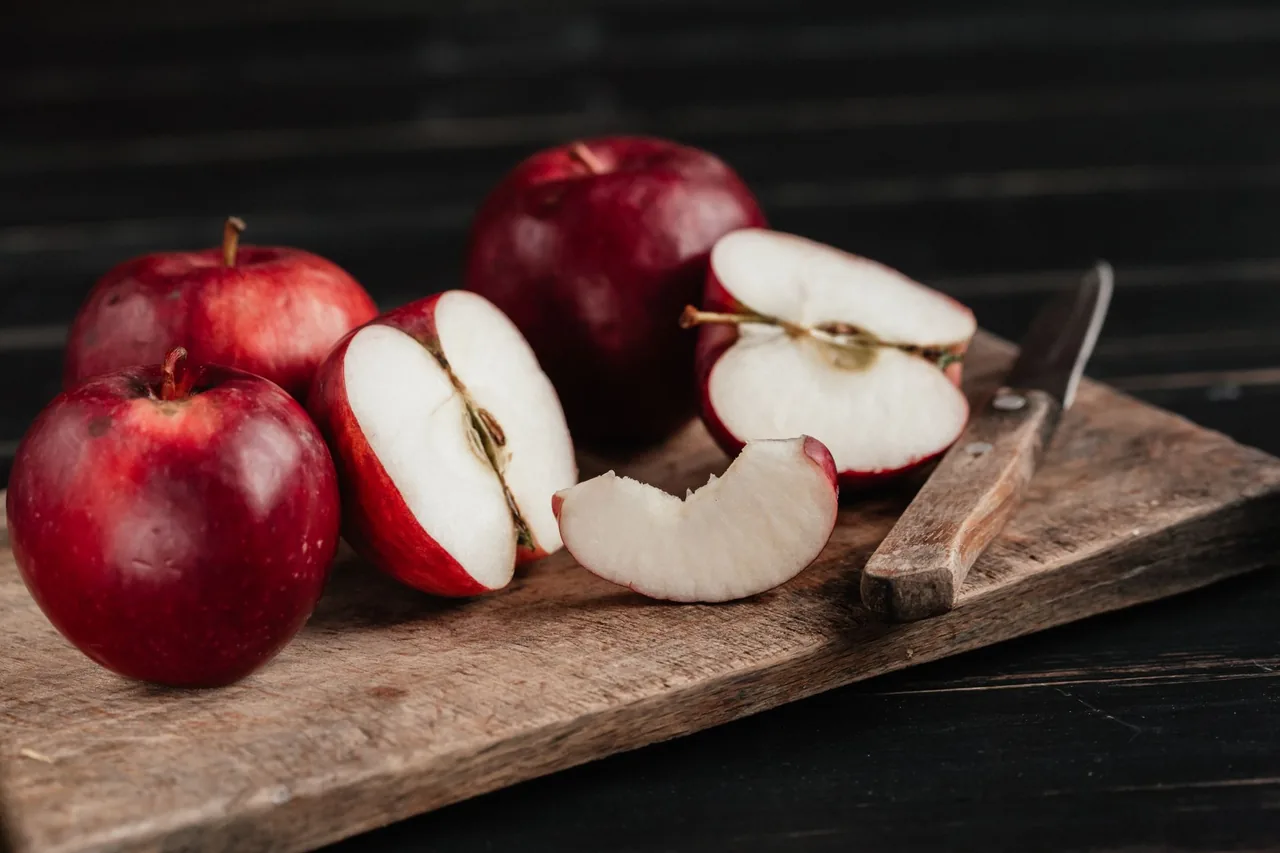
Wash the apple first, since the peel can carry pesticide residue. The peel itself is safe and adds fiber, but if your dog has a sensitive stomach, peeled slices are gentler. Cut the flesh away from the core, slice it to a size that suits your dog’s mouth — small cubes for small dogs — and serve it plain.
Keep it plain. Skip caramel apples, apple pie filling, cinnamon-sugar preparations, and anything from a bakery: the added sugar and fat are where a safe fruit turns into a stomach upset or worse. Applesauce is only okay if it is unsweetened and you have read the label — some “no sugar added” products are sweetened with xylitol, which is toxic to dogs (it sits firmly in the toxic column of the checker). When in doubt, whole apple you sliced yourself is the safe version.
For summer, frozen apple slices are a cheap enrichment win: cold, crunchy, and slow to eat. A few small pieces frozen into a stuffable toy alongside a smear of xylitol-free peanut butter makes a long-lasting settle-mat project; the peanut butter guide covers the label check that makes that combination safe.
When to skip apples or ask your vet first
Apple flesh carries natural sugar, around 19 grams in a medium apple. For a healthy dog eating a slice or two, that’s a non-issue. But if your dog has diabetes or is on any vet-directed restricted-sugar or weight-loss plan, ask your vet before adding fruit of any kind; VCA and AVMA guidance both put diet changes for dogs with medical needs in the vet’s hands, not the treat jar’s. The same goes for dogs with chronic digestive issues, where even good fiber can be the wrong fiber.
What if my dog ate a whole apple, core and all?
Usually, nothing happens. The flesh is safe and a single core’s seeds are a small dose. The realistic risk is mechanical: watch for gagging, drooling, repeated vomiting, loss of appetite, a hunched or painful belly, or straining without producing stool over the next day or two. Any of those signs, or a small dog who swallowed a large core, is a call-your-vet situation. If you’re ever unsure about something your dog ate, ASPCA Animal Poison Control and Pet Poison Helpline take calls around the clock, and the Dog Toxic-Foods Checker lists both numbers alongside dozens of verified food verdicts.
A better training treat than most
Tiny apple cubes also make an excellent low-calorie training reward for food-motivated dogs: cheap, healthy, and easy to portion small. They sit nicely in a rotation with other checker-verified safe options like carrots, blueberries, and green beans, so a long reward-based training session doesn’t blow the calorie budget. Look up any new candidate in the checker before it joins the rotation, let the feeding calculator set the day’s treat allowance, and share the apple, minus the middle.
Frequently asked questions
- Will apple seeds really poison my dog?
- Apple seeds contain amygdalin, which can release cyanide when the seeds are chewed and digested, which is why they earn the warning. But the dose in a few seeds is small, and veterinary toxicology sources such as Pet Poison Helpline note that a dog who accidentally swallows a couple of seeds with a bite of apple is very unlikely to be poisoned; intact seeds largely pass through. The sensible policy is still to remove them every time: there's no benefit to feeding them, the risk isn't zero if a dog regularly crunches through many seeds, and the core they sit in is a real choking and blockage hazard in its own right. If your dog ate seeds and you're worried, call your vet or a poison line rather than waiting on symptoms.
- Can dogs eat apple skin?
- Yes — apple peel is safe for dogs and adds a little extra fiber. Two practical notes. First, wash the apple before slicing, because peels can carry pesticide residue from the store. Second, the peel is the toughest part of the fruit to digest, so if your dog has a sensitive stomach or is brand new to apples, peeled slices are the gentler introduction; you can add the skin back once you know their digestion handles apple well. Loose stool after a big apple snack is usually a fiber-quantity problem rather than a peel problem — cut the portion down and it typically resolves. The parts to always remove are the core, seeds, and stem, not the skin.
- Can dogs eat applesauce?
- Only plain, unsweetened applesauce, and only after you've read the ingredient label. Many commercial applesauces add sugar your dog doesn't need, and some "no sugar added" or "sugar-free" versions are sweetened with xylitol (sometimes listed as birch sugar), which is severely toxic to dogs and treated as an emergency by ASPCA Animal Poison Control. If the label lists only apples (and perhaps water or ascorbic acid), a spoonful is a fine occasional treat, frozen into a toy or stirred into food. If there's any sweetener you don't recognize, skip it. Fresh apple slices you cut yourself are the safer, cheaper default, since you control exactly what's in them, and the crunch is half the appeal for most dogs anyway.
- How much apple can I give my dog?
- Keep apple — and all treats combined — within about 10% of your dog's daily calories, the standard veterinary treat guideline; balanced dog food should supply the other 90%. In practice that means a slice or two for a small dog, a few slices for a medium dog, and up to around half an apple in slices for a large dog, not necessarily every day. Introduce it gradually: apple's fiber can loosen stools in a dog who isn't used to it, so start with a slice and watch for a day. If your dog has diabetes or is on a vet-directed weight or restricted-sugar plan, ask your vet before adding fruit at all. The free feeding calculator gives you the daily calorie number that makes the 10% budget concrete.
Educational content only — not veterinary or professional behavior advice. Consult your vet, or a certified trainer or behaviorist, for your pet. Read the full disclaimer →