Can Dogs Eat Blueberries?
Bite-sized, low-calorie, and antioxidant-rich — blueberries might be the closest thing to a perfect training treat in the fruit bowl.
On this page
Yes — dogs can eat blueberries, and if you’re looking for a fruit that doubles as a training treat, this is the one. Blueberries are bite-sized, low in calories, easy to carry in a pocket, and packed with antioxidants, which makes them close to ideal for handing over by the dozen during a reward-based session. Our free Dog Toxic-Foods Checker lists blueberries as Safe: “Bite-sized and antioxidant-rich — great training treats,” to be fed “as an occasional treat.” There’s barely a catch here at all.
Below is why blueberries are such a useful treat, the one small note for tiny dogs, and how to serve them.
Why blueberries make an ideal training treat
The thing that makes a great training treat is that it’s small, low-calorie, and something your dog will happily work for — because in a training session you might reward twenty or thirty times. Blueberries hit all three. They’re naturally lower in sugar than a lot of fruit, they’re already the perfect single-reward size, and most dogs like them. That combination lets you run a long session without loading your dog with calories, which matters given how many dogs are already carrying extra weight, per AVMA data.
They also bring real nutrition along for the ride — fibre, vitamin C, and the antioxidants blueberries are famous for — though as always, that’s a bonus on top of a complete diet rather than something your dog needs. The AKC lists them among the fruits dogs can safely eat, and there’s nothing to prepare beyond a rinse.
The one small note: tiny dogs
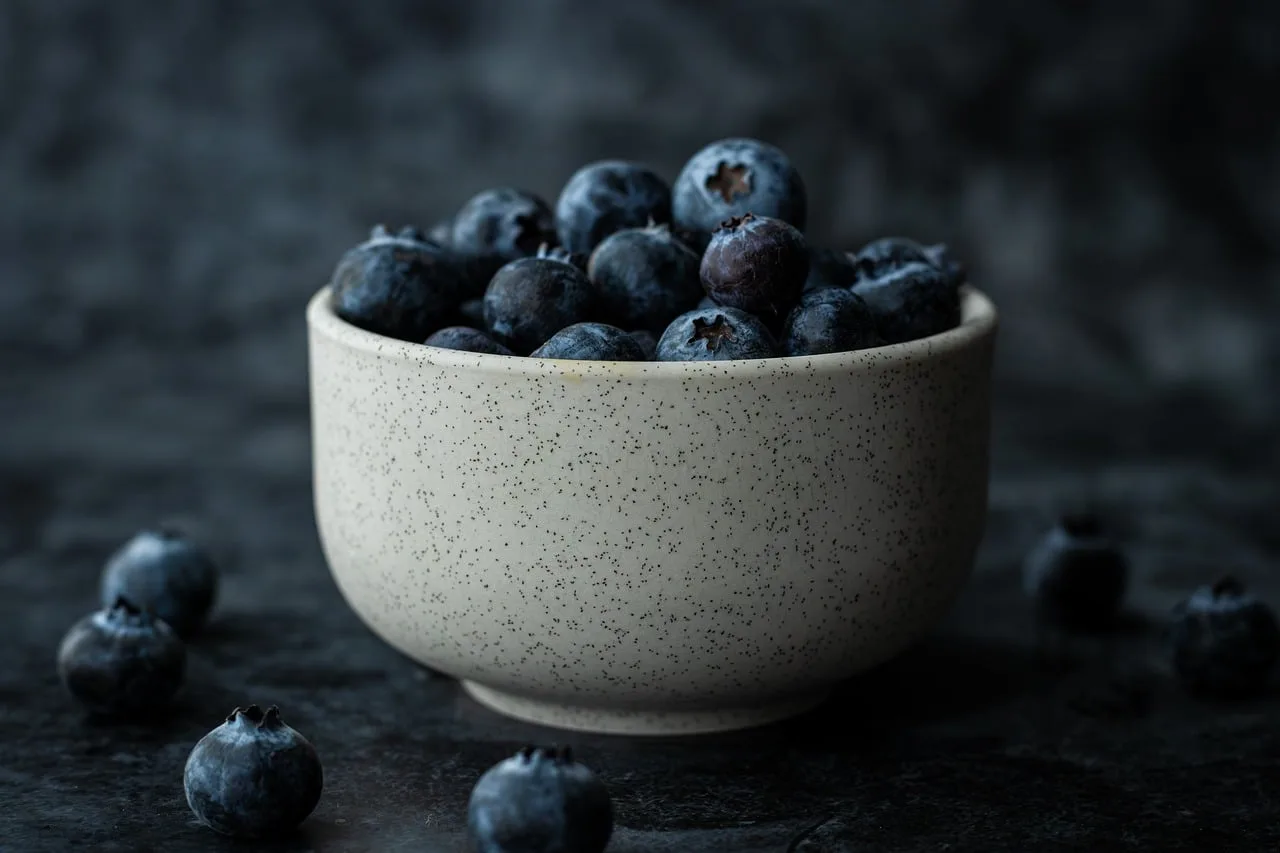
For most dogs, a whole blueberry is small enough to be a non-issue. The only situation worth a thought is a very small or toy-breed dog, or a dog who bolts treats whole without chewing: a firm round berry can occasionally be inhaled. The fix takes seconds — squash or halve them for little dogs, and do the same with frozen berries since they’re harder. For a medium or large dog who chews, whole is fine.
That’s genuinely the extent of the caution. Blueberries are one of the lowest-risk treats on the safe list.
How much, and how to serve them
Blueberries are low-calorie enough to be one of the more generous treats, but they still count toward the 10% treat budget — treats of all kinds within about 10% of daily calories, the veterinary guideline AAHA uses. A few berries for a small dog and a small handful for a large one is a sensible everyday amount, and on a heavy training day, remember the rewards add up. Our free Dog Feeding Calculator gives you the daily calorie number that turns the 10% into real math.
Serve them fresh with a wash, or frozen for a cheap cooling summer treat. Frozen blueberries pressed into a lick mat, or frozen into a stuffable toy with a spoon of plain yogurt, stretch a small handful into a longer project. Introduce them gradually — like any fruit, a big first serving can loosen stools, and the fix is simply less.
The blueberry products to skip
Fresh or plain-frozen is the version that’s a treat. Blueberry muffins are a sugary, fatty baked good and sometimes contain xylitol; sweetened dried blueberries pack more sugar into less space; and blueberry-flavoured yogurts and cereals are built for people, not dogs. Plain, unsweetened dried blueberries are fine in smaller numbers if you check the bag for added sugar, but fresh is simplest. As with every fruit, the plain berry is the treat and the baked version isn’t.
When to check with your vet
Blueberries suit almost every dog, but the usual notes apply: if your dog is diabetic or on a vet-directed diet, ask before adding any new food, and go slow if your dog has a sensitive stomach. If your dog got into a blueberry baked good and you’re unsure what was in it — xylitol especially — our Dog Toxic-Foods Checker lists verified verdicts and the ASPCA and Pet Poison Helpline numbers.
The training treat that’s actually good for them
It’s rare to find a treat that’s low-calorie, the right size, genuinely nutritious, and something your dog will work for — blueberries are all four, which is why they belong in every reward-based trainer’s pocket. Rotate them with other checker-verified options like carrots, apple, and strawberries, keep the total inside the 10% the feeding calculator gives you, and run anything new through the checker first.
Frequently asked questions
- How many blueberries can a dog have?
- Because they're tiny and low in calories, blueberries are one of the more forgiving fruit treats — but the 10% rule still applies. A few berries for a small dog and a small handful for a large one is a sensible everyday amount, and because they portion so small they're ideal for training, where you're handing over many little rewards. The limit is mostly digestion: a big serving of any fruit can loosen stools, so build up gradually. Count blueberries toward the treat budget just like anything else, especially on a heavy training day.
- Can blueberries be a choking hazard for small dogs?
- A whole blueberry is small enough that most dogs handle it fine, but for a very small or toy-breed dog, or a dog who swallows treats without chewing, a firm round berry can occasionally be inhaled. The easy fix is to squash or halve them for little dogs — it takes seconds and removes the risk entirely. Frozen berries are firmer, so cut those too for small dogs. For a medium or large dog who actually chews, whole blueberries are generally no concern.
- Are frozen blueberries okay for dogs?
- Yes, and they're a great cheap treat — a handful of frozen blueberries is cooling in summer and slows a fast eater down. The only tweaks: frozen berries are harder, so squash or halve them for small dogs and dogs with dental issues, and keep the portion the same as fresh since freezing doesn't change the sugar or calories. Frozen blueberries also work well pressed into a lick mat or frozen into a stuffable toy with a little plain yogurt for a longer-lasting treat.
- Can dogs eat dried blueberries or blueberry muffins?
- Plain, unsweetened dried blueberries are safe but more concentrated in sugar and calories, so use fewer than you would fresh — and check the bag, because many dried berries have added sugar. Blueberry muffins are a firm no: they're a sugary, fatty baked good, and some are made with xylitol or contain other add-ins dogs shouldn't have. The pattern holds across every fruit — the plain fruit is the treat, and the baked or sweetened version isn't. Stick to fresh or plain-frozen blueberries and you can't go wrong.
Educational content only — not veterinary or professional behavior advice. Consult your vet, or a certified trainer or behaviorist, for your pet. Read the full disclaimer →