Can Dogs Eat Strawberries?
A sweet, fibre-and-vitamin-C-rich treat dogs enjoy — the only real limit is the natural sugar, so keep it to a couple.
On this page
Yes — dogs can eat strawberries. Fresh, washed, and cut to size, a strawberry is a sweet, juicy treat that plenty of dogs enjoy, and it brings a little fibre and vitamin C along with it. Our free Dog Toxic-Foods Checker lists strawberries as Safe: “Fiber and vitamin C — naturally sugary, so a couple as a treat,” with the note to serve them “fresh, in moderation.” That “a couple” is the operative phrase, and it’s all about the sugar.
Below is why moderation is the whole rule with strawberries, how to serve them, and the sweetened strawberry products that turn a safe fruit into a bad idea.
Why strawberries are a fine treat
Strawberry flesh is low in fat, carries fibre and a good hit of vitamin C, and has the kind of sweet, juicy texture a lot of dogs go for. As with every fruit on the safe list, the nutrients are a pleasant bonus rather than the point — your dog’s complete food already covers their needs — so a strawberry’s real value is being a treat dogs like that’s lower in calories than most processed biscuits. The AKC lists strawberries among the fruits dogs can safely eat.
The single thing to manage is sugar, which is why the checker says “a couple” rather than “help yourself.”
The catch: natural sugar
Strawberries are naturally sweet, and while that sugar is nothing like the danger of, say, xylitol, it’s the reason strawberries stay a small treat. Regular sugary snacking adds calories a dog doesn’t need, and a large share of dogs already carry extra weight, per AVMA body-condition surveys. The other limiter is fibre: a big first serving of fruit is a classic cause of loose stools.
So the guidance is simply restraint: a couple of berries for a small dog, a few for a large one, and not every day. Kept to that, strawberries fit comfortably inside the veterinary 10% treat rule that AAHA and others use — treats of all kinds within about 10% of daily calories. If you want the daily calorie figure that makes that budget concrete, our free Dog Feeding Calculator works it out from weight and activity.
If your dog has diabetes or is on a vet-directed weight plan, check before adding fruit at all — the sugar is precisely what those plans are watching.
How to serve strawberries
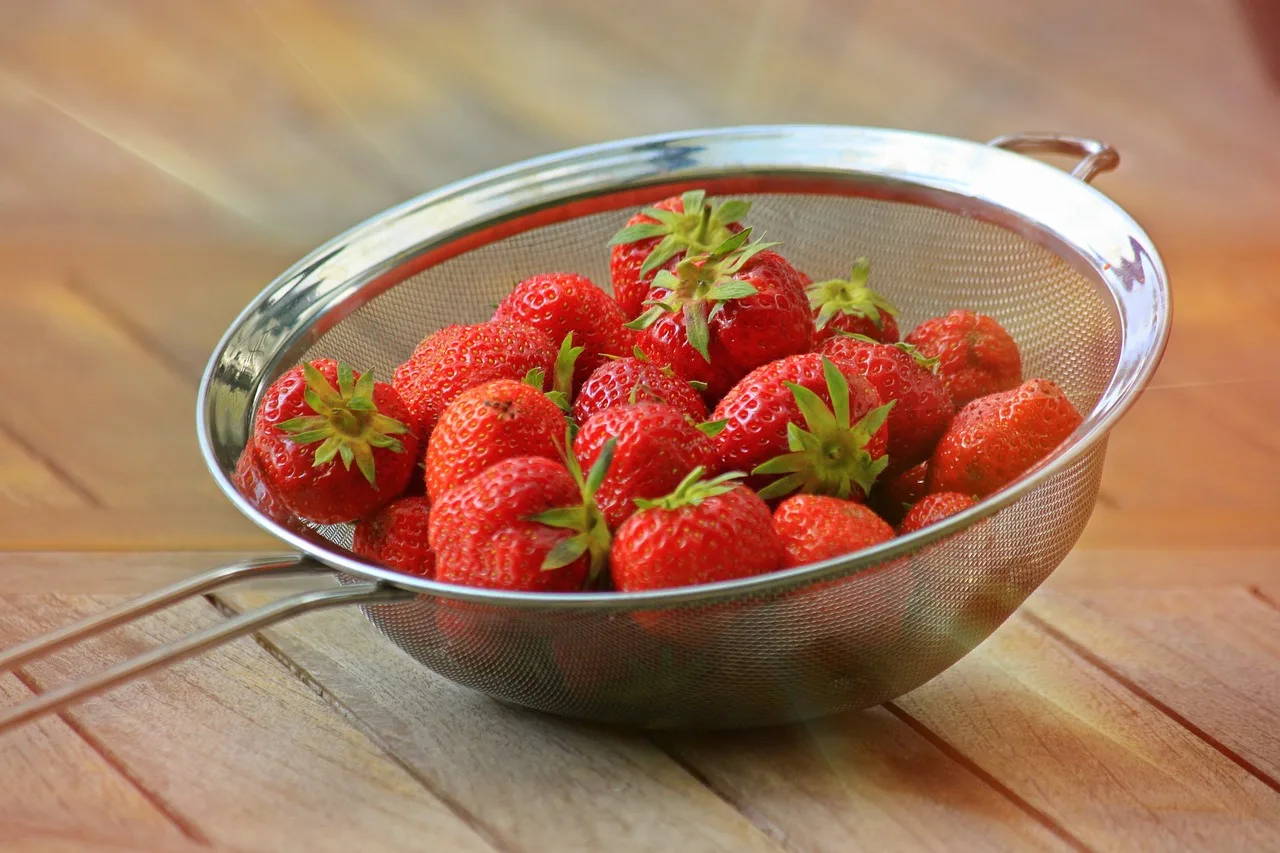
Wash the berries, pull off the green leafy tops, and cut them into pieces sized to your dog — quarters or smaller for a little dog so nothing gets swallowed whole. Serve them fresh and plain. For a summer treat, freeze small pieces for a cheap cooling snack, or mash a little strawberry onto a lick mat or into a stuffable toy to make it last.
Introduce them the way you would any new food: start with a small piece and watch your dog’s digestion over the next day. The combination of sugar and fibre can loosen stools in a dog who isn’t used to fruit, and the fix is just a smaller portion.
The strawberry products to skip
Fresh is the version that’s safe. Canned or syruped strawberries are swimming in added sugar; strawberry jam is essentially sugar; chocolate-covered strawberries pair the fruit with chocolate, which is toxic to dogs; and strawberry-flavoured yogurt or ice cream are sweetened and may hide xylitol in their “sugar-free” forms. If you want a creamy strawberry treat, mash fresh berry into a little plain, unsweetened, xylitol-free yogurt yourself. The rule that keeps most human foods safe applies here too: feed the plain fruit you prepared, not the sweetened product built for people.
When to check with your vet
For a healthy dog, a strawberry or two is low-stakes. Ask your vet first if your dog is diabetic, overweight on a managed plan, or has a history of digestive trouble, and give any new food a miss if your dog has reacted to fruit before. If your dog got into a sweetened or chocolate-covered strawberry product and you’re unsure what was in it, our Dog Toxic-Foods Checker lists verified verdicts plus the ASPCA and Pet Poison Helpline numbers, which take calls around the clock.
A sweet treat that rotates well
Strawberries slot neatly into a rotation with other checker-verified safe options like blueberries, apple, and watermelon — a little variety of low-calorie fruit keeps treat time interesting without any one of them adding up. Wash and cut them, keep it to a couple, run anything new through the checker first, and count it toward the 10% the feeding calculator gives you.
Frequently asked questions
- How many strawberries can a dog eat?
- Keep it small: strawberries are naturally sugary, so a couple for a small dog and a few for a large one is plenty, kept inside the 10% treat rule (treats of all kinds within about 10% of daily calories). They're a treat, not a fruit bowl. The reason for restraint isn't toxicity — it's the sugar and the fibre, both of which can upset a stomach in quantity or over time. If your dog has diabetes or is on a vet-directed diet, ask before adding fruit at all, since the natural sugar is exactly what those plans manage.
- Can dogs eat strawberry tops and leaves?
- The green leafy tops aren't toxic, but I'd remove them. They're fibrous and not really digestible, so they add nothing and can contribute to an upset stomach, and for a small dog a wad of stem is an unnecessary choking risk. It takes a second to pull the top off, so there's no reason to leave it on. If your dog snatched a whole strawberry, top and all, it's almost never a problem — just watch for any stomach upset and don't make a habit of it.
- Are frozen strawberries safe for dogs?
- Yes — frozen strawberries make a cheap, cooling summer treat, and the cold slows a fast eater down. Cut them small before freezing so a rock-hard whole berry isn't a choking risk or hard on the teeth, and let very firm pieces soften for a moment if your dog has dental issues. Mashed strawberry frozen onto a lick mat or into a stuffable toy stretches the treat out further. Just keep the quantity the same as fresh — freezing doesn't change the sugar.
- Can dogs eat strawberry yogurt or ice cream?
- Skip the flavoured products. Strawberry yogurt and ice cream are sweetened, often heavily, and 'light' or 'sugar-free' versions may contain xylitol, which is severely toxic to dogs. Many dogs also don't digest dairy well, so ice cream can mean an upset stomach on top of the sugar. If you want a creamy strawberry treat, mash a little fresh strawberry into a spoon of plain, unsweetened, xylitol-free yogurt instead — you control what's in it. Fresh berries you prepared yourself are always the safer choice over anything strawberry-flavoured.
Educational content only — not veterinary or professional behavior advice. Consult your vet, or a certified trainer or behaviorist, for your pet. Read the full disclaimer →