Can Dogs Eat Cheese?
Most dogs can handle a small cube of plain cheese, but between lactose, fat, salt, and hidden add-ins, dairy earns its "caution" label.
On this page
Usually yes, in small amounts, but cheese is a “caution” food, not a free treat. The Dog Toxic-Foods Checker files milk, cheese and dairy under caution for a simple reason: most adult dogs are lactose-intolerant (gas, loose stool), cheese is high in fat and salt, and ice cream adds sugar. The practical rule is just as simple: small plain amounts are usually fine; skip it if it upsets their stomach. Cheese isn’t poison the way chocolate or grapes are. For most dogs, a pea-to-fingernail-sized cube of plain cheese is one of the best high-value training rewards there is. The caution label exists because “a little cheese” quietly becomes “a lot of cheese,” and because some cheesy foods hide toxic ingredients.
Why cheese earns a “caution” label
Three separate issues stack up, and none of them requires cheese to be “toxic” to cause a bad night.
Lactose. Puppies produce plenty of lactase, the enzyme that digests milk sugar, but production drops sharply after weaning. The Merck Veterinary Manual and the ASPCA’s people-foods guidance both note that adult dogs don’t make significant amounts of lactase, which is why milk and dairy commonly cause digestive upset: gas, bloating, soft stool, sometimes vomiting. Hard, aged cheeses contain far less lactose than milk, which is why many dogs tolerate a cube of cheddar better than a bowl of milk. But tolerance varies dog to dog, and you usually find out the messy way.
Fat and salt. Cheese is calorie-dense, fatty, and often salty. A sudden fatty windfall — half a block of brie, a plate of nachos — can trigger pancreatitis, a painful and sometimes serious inflammation of the pancreas that the Merck Veterinary Manual links to high-fat meals, especially in prone dogs (miniature schnauzers and overweight dogs are classic examples). Very salty cheeses add excessive thirst and, in extreme amounts, salt toxicity concerns flagged by Pet Poison Helpline.
Hidden add-ins. This is where “caution” gets serious. Cheeses and cheese spreads flavored with onion, garlic, or chives contain compounds that damage canine red blood cells — ASPCA Animal Poison Control lists the whole allium family as toxic to dogs. Festive cheese balls and some fruited cheeses contain raisins or grapes, which can cause kidney failure in dogs even in small amounts. And blue cheeses (Roquefort, Stilton, gorgonzola) are made with molds that can produce roquefortine C, a substance Pet Poison Helpline associates with tremors and vomiting in dogs. Plain cheese is a caution; these versions are a hard no.
How much cheese is okay?
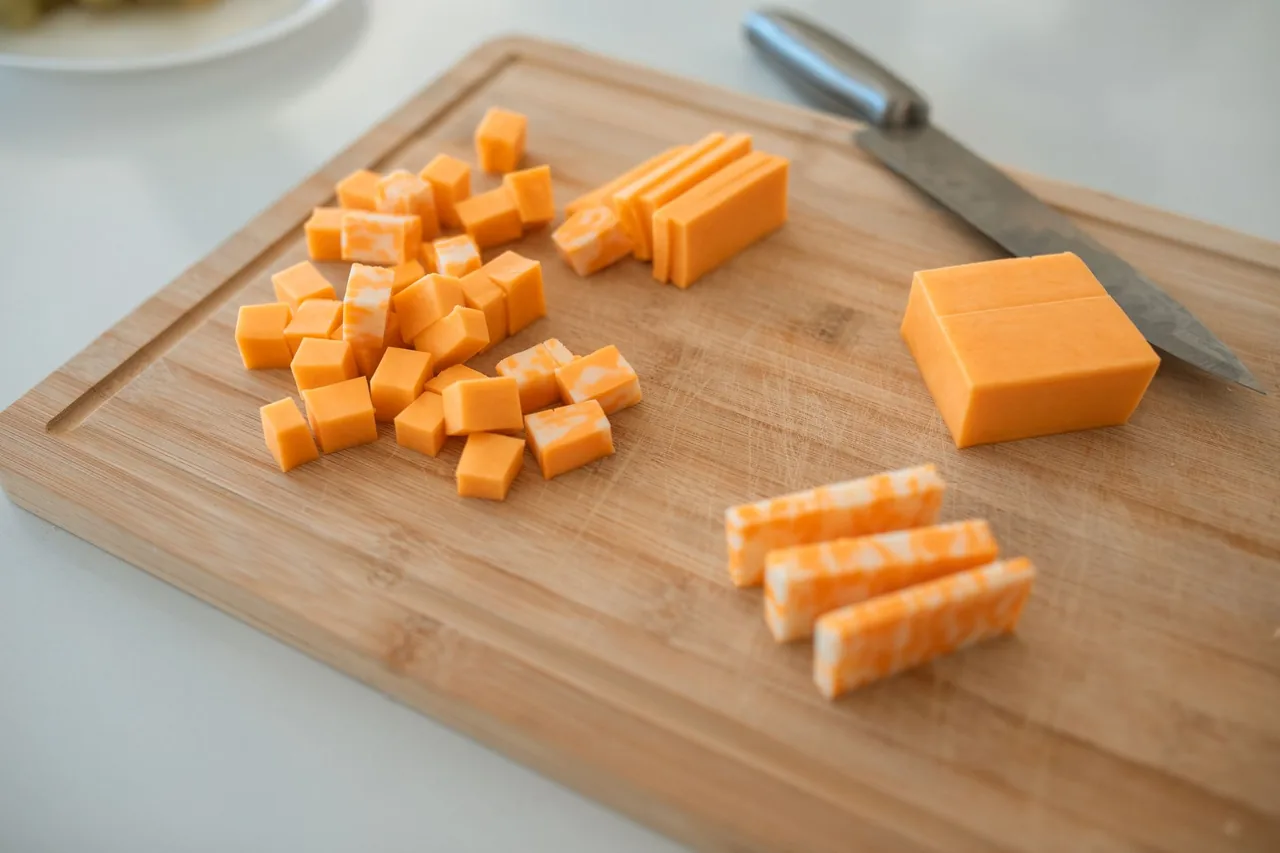
Think garnish, not portion. For a medium dog, a cube roughly the size of a fingernail, or a few pea-sized training crumbs, is plenty; scale down for small dogs. Veterinary guidance popularized by the AKC and used by veterinary nutritionists caps all treats at about 10% of a dog’s daily calories, and cheese burns through that budget fast: cheddar runs around 100+ calories per ounce. If you’re not sure what your dog’s daily intake should look like, the free dog feeding calculator gives you a starting point to discuss with your vet. Keep cheese occasional — a few times a week, not a daily ritual — and always introduce it in a tiny amount the first time.
Signs the dairy didn’t sit well
Most reactions are digestive and show up within a few hours to a day: gas, rumbling gut, soft stool or diarrhea, vomiting, or a dog who seems bloated and uncomfortable. Those usually resolve on their own once the dairy passes. The signs that warrant a call to your veterinarian are different: repeated vomiting, refusal to eat, a hunched or “praying” posture, a tender belly, or lethargy. The Merck Veterinary Manual lists these among the classic signs of pancreatitis, which needs professional care, not waiting out.
What to do if your dog overdid it or ate the wrong cheese
If your dog stole a chunk of plain cheese, don’t panic. Note roughly how much was eaten, offer fresh water, skip further treats, and watch for the digestive signs above. Mild, short-lived stomach upset in an otherwise bright dog can usually be monitored at home; call your vet if vomiting or diarrhea persists beyond a day, or sooner in puppies, seniors, or small dogs.
If the cheese contained onion, garlic, chives, raisins, or was a blue cheese — or if your dog is prone to pancreatitis and ate a large fatty amount — call your veterinarian, ASPCA Animal Poison Control at (888) 426-4435, or Pet Poison Helpline at (855) 764-7661 right away rather than waiting for symptoms. With alliums and raisins, early guidance matters far more than the amount looks like it should.
Lower-risk cheeses — and the ones to skip
When you do share, choose plain, low-fat, lower-sodium options: low-fat mozzarella, plain cottage cheese (lower in lactose than most), Swiss, or a small crumb of mild cheddar. Softer fresh cheeses like plain ricotta are fine in tiny amounts for dogs who tolerate dairy.
Skip: blue cheeses of any kind; anything flavored with onion, garlic, chives, or herbs-and-garlic blends; fruited or festive cheeses that may hide raisins; heavily salted styles like feta and halloumi in anything more than a crumb; queso dips and cheese sauces (usually loaded with garlic and onion); and cream-cheese frostings or cheesecake, where sugar and fat pile on top of the dairy. When you’re standing at the fridge unsure about a specific item, the toxic-foods checker covers dairy and dozens of other everyday foods in a couple of seconds.
Cheese as a training tool — its best job
Used deliberately, cheese is elite training currency. Reward-based training, the approach endorsed by the American Veterinary Society of Animal Behavior (AVSAB) as both effective and humane, works best when the reward matters to the dog, and few things matter like cheese. Save it for the hard stuff: recalls past distractions, calm greetings, husbandry handling. Tiny pea-sized pieces keep the calorie cost low and the motivation high. It’s also the classic pill-hider — a soft cube molded around a tablet goes down without a fight (check with your vet first, since a few medications shouldn’t be given with dairy). Save the best treats for your hardest cues; the Dog Training Commands Guide shows how, step by step, and a pocketful of cheese crumbs is the right currency for it.
Safer everyday alternatives
If your dog is one of the many whose gut protests dairy, you don’t lose anything by skipping it. Plain cooked chicken, tiny bits of plain cooked egg, carrot coins, apple slices (no seeds or core), blueberries, and plain green beans are all lower-fat, dairy-free options that most dogs find plenty exciting. For lactose-sensitive dogs who still deserve a “cheesy” jackpot, a smear of plain lactose-free hard cheese or a commercial dog training treat does the job. Whatever you choose, the same caution-food logic applies: small amounts, plain versions, and when in doubt, a ten-second look in the checker before it leaves your hand.
Frequently asked questions
- Is cheese toxic to dogs?
- No. Plain cheese is not toxic to dogs the way chocolate, grapes, or onions are. It's a "caution" food: most adult dogs are lactose-intolerant, so dairy can cause gas, loose stool, or vomiting, and cheese's high fat and salt content adds pancreatitis risk in prone dogs, per the Merck Veterinary Manual. The real toxicity danger comes from add-ins, not the cheese itself: onion, garlic, or chive-flavored cheeses damage red blood cells, fruited cheese balls can hide raisins (a kidney-failure risk flagged by ASPCA Animal Poison Control), and blue-cheese molds can produce roquefortine C, which Pet Poison Helpline links to tremors. A small cube of plain cheese is usually fine; those variations are not.
- Can dogs eat cheese dip or queso?
- I'd keep it off the table for dogs. Cheese dip and queso are rarely just cheese: many are made with onion or garlic powder, which damage a dog's red blood cells even in dried form, and they are high in the fat and salt that the Merck Veterinary Manual ties to pancreatitis in prone dogs. A lick of plain dip is unlikely to cause more than an upset stomach, but if the dip had onion or garlic in it, or your dog ate a bowlful, call your vet or a poison line with the ingredients and your dog's weight.
- What kind of cheese can I give my dog?
- Stick to plain, low-fat, lower-sodium cheeses: low-fat mozzarella, plain cottage cheese, Swiss, or a small crumb of mild cheddar. Hard, aged cheeses contain much less lactose than milk, so many dogs tolerate them better than other dairy. Keep the serving tiny — a fingernail-sized cube for a medium dog, less for small breeds — and treat it as an occasional reward, not a daily food. Avoid blue cheeses (Roquefort, Stilton, gorgonzola), anything flavored with onion, garlic, or chives, fruited or festive cheeses that may contain raisins, salty styles like feta in more than a crumb, and cheese dips or sauces, which are usually made with garlic and onion. When in doubt about a specific product, check the label for those ingredients first.
- Can dogs drink milk?
- A few laps of milk won't poison a healthy dog, but it's rarely worth it. The ASPCA's people-food guidance notes that adult dogs don't produce significant amounts of lactase, the enzyme needed to digest milk sugar, so milk commonly causes gas, bloating, soft stool, or diarrhea. Milk is also one of the highest-lactose dairy products, which is why dogs often react worse to it than to a cube of aged cheese. Puppies digest their mother's milk fine, but cow's milk is not a substitute for a proper milk replacer in orphaned puppies. If your dog has ever had a loose stool after dairy, skip milk entirely; water is the only drink a dog needs.
- Can I use cheese to hide my dog's pills?
- Yes. This is one of cheese's best jobs, and a big reason vets don't blanket-ban it. A soft cube of plain cheese molded around a tablet hides both the smell and the texture, turning medication time into a treat instead of a wrestling match, which fits the reward-based, force-free handling approach recommended by AVSAB. Two caveats: first, ask your veterinarian or pharmacist whether the specific medication can be given with dairy, because a small number of drugs (some antibiotics, for example) absorb poorly alongside calcium-rich foods. Second, keep the pill-pocket portion tiny and plain — no blue cheese, no garlic-herb spreads — so the daily pill routine doesn't quietly become a daily fat-and-salt habit.
Educational content only — not veterinary or professional behavior advice. Consult your vet, or a certified trainer or behaviorist, for your pet. Read the full disclaimer →