Can Dogs Eat Popcorn?
Plain air-popped popcorn is a fine occasional treat — but butter, salt, and unpopped kernels are exactly where it goes wrong.
On this page
Sometimes — dogs can eat popcorn, but only the plain, air-popped kind, and only a few pieces. The popcorn most of us actually eat, drenched in butter and salt, is exactly the version to keep away from your dog. Our free Dog Toxic-Foods Checker files popcorn under Caution for this reason: “Plain air-popped popcorn is a safe treat, but butter and salt aren’t, and unpopped kernels can crack teeth or choke.” So the honest answer is “plain, yes; movie-night, no.”
Below is what makes popcorn safe or not, why the kernels matter more than the popcorn, and how to share a few pieces without a problem.
When popcorn is fine — and when it isn’t
Plain popcorn — just corn, air-popped, with nothing on it — is a low-calorie, high-fibre snack that’s harmless in small amounts. If you air-pop a batch and set aside a small handful before you season yours, a few pieces make a perfectly fine occasional treat, and most dogs enjoy the crunch. The AKC puts plain air-popped popcorn in the “okay in moderation” category for exactly that reason.
The trouble is everything we add. Butter and oil pile on fat that can upset a stomach or feed a pancreatitis flare in a prone dog. Salt is the bigger concern: dogs are far more sensitive to sodium than we tend to assume, and a lot of salty popcorn causes intense thirst and, in real quantity, sodium poisoning. Caramel corn is sugar; cheese popcorn is fat and salt; microwave and flavoured popcorns add coatings that aren’t meant for dogs. None of those are “popcorn” in the way that’s safe.
The real hazard: kernels
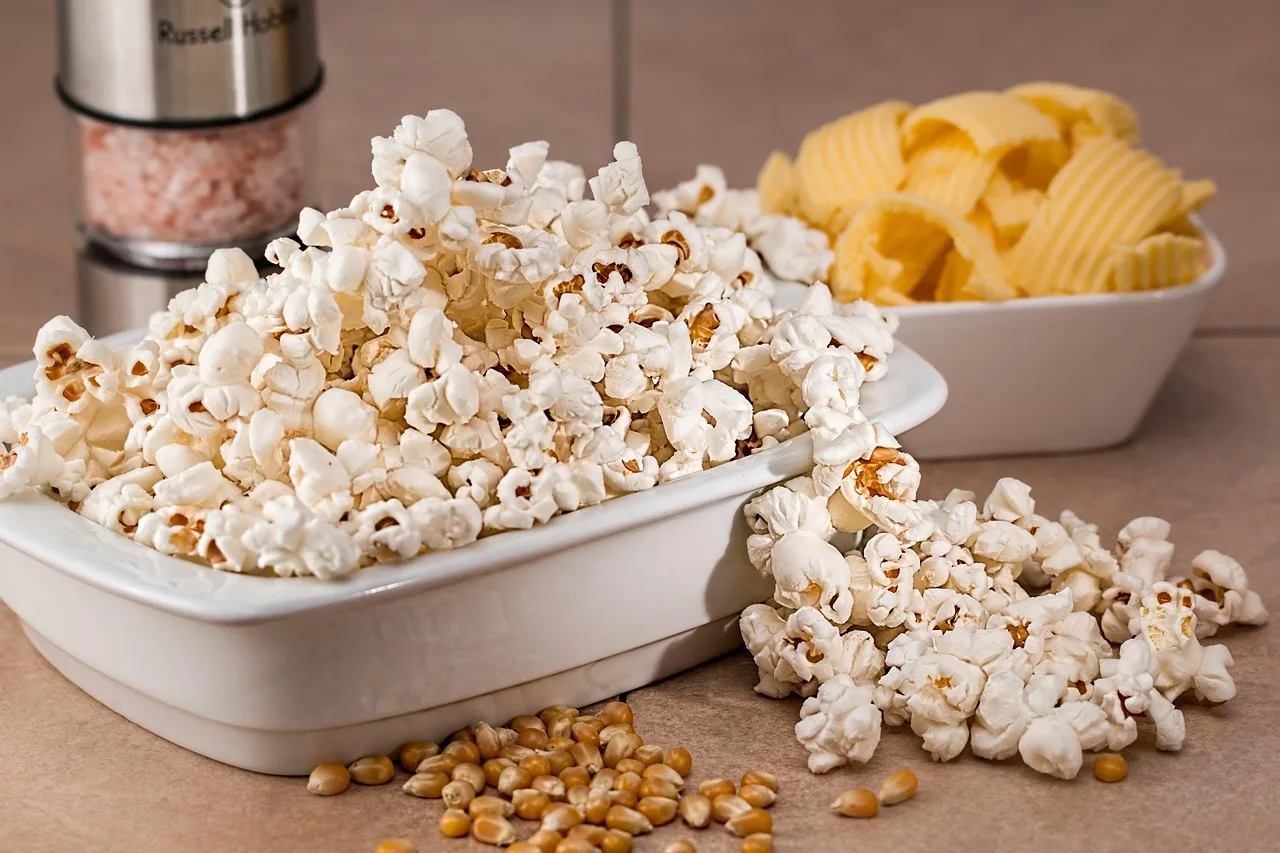
Here’s the part people overlook. The most likely popcorn problem isn’t the fluffy popped pieces at all — it’s the hard unpopped and half-popped kernels lurking at the bottom of the bowl. A kernel can crack a tooth, wedge between teeth, or choke a small dog, and it’s a genuine dental-emergency risk. So if you’re sharing, hand over only fully popped, fluffy pieces, and pick out anything hard first.
Just as important, keep the bowl and bag out of reach. A dog left alone with popcorn will happily hoover up kernels, salt, butter and all, so the counter-surf is often where the real dose comes from.
How much popcorn, and how to serve it
The honest framing is that popcorn is empty snacking for a dog — it’s not nutritious, so it earns a small, occasional spot at best. A couple of pieces for a small dog and a small handful for a large one, of plain air-popped popcorn, kept inside the 10% treat budget. Air-pop it (no oil), set your dog’s share aside before you season your own, and pick out the kernels.
If you want a treat your dog actually benefits from for the same calories, a few blueberries or carrot pieces do far more good. Our free Dog Feeding Calculator gives you the daily calorie number that keeps the 10% budget honest across all your dog’s treats.
When to call your vet
A stray piece or two of buttery popcorn off the floor is rarely an emergency. But call your vet if your dog eats a whole bowl of salty, buttery popcorn — watch for heavy drinking, vomiting, diarrhoea, or restlessness, which can signal too much salt or fat — or if you think a kernel has caused choking, a broken tooth, or a blockage. For anything you’re unsure a dog ate, our Dog Toxic-Foods Checker lists verified verdicts and the ASPCA and Pet Poison Helpline numbers, staffed around the clock.
The bottom line on popcorn
Plain, air-popped, kernel-free, and just a few pieces: that’s the safe version, and it’s a fine now-and-then treat to share. Everything that makes popcorn good to us — butter, salt, flavour — is what makes it wrong for a dog, and the hard kernels are the sneaky hazard to remember. Keep the seasoned bowl to yourself, check anything new against the checker, and keep treats inside the 10% the feeding calculator gives you.
Frequently asked questions
- Is buttered or microwave popcorn bad for dogs?
- Yes — that's the version to avoid. Butter and oil add fat that can upset a dog's stomach or, in a prone dog, contribute to pancreatitis, and the salt on movie-style popcorn is a real problem: too much salt causes excessive thirst and, in large amounts, sodium poisoning. Microwave popcorn adds more concerns, since some flavourings and 'butter' coatings aren't meant for dogs. If your dog snags a few pieces of buttery popcorn off the floor it's usually not an emergency, but a dog who eats a whole bowl of salty, buttery popcorn should have your vet on the phone.
- Are popcorn kernels dangerous for dogs?
- The hard unpopped and half-popped kernels at the bottom of the bowl are the biggest hazard in popcorn. They can crack a tooth, and for a small dog they're a choking risk — a far more likely problem than the popcorn itself. Whole kernels can also lodge between teeth or irritate the gums. So if you're sharing popcorn, give only fully popped, fluffy pieces and pick out anything hard first. Keep the bag or bowl out of counter-surfing range too, since a dog left alone with popcorn will happily crunch the kernels.
- How much popcorn can a dog have?
- A few pieces — think a couple for a small dog and a small handful for a large one, of plain, fully air-popped popcorn, and only occasionally. Popcorn is essentially empty snacking for a dog: it's not nutritious, and the calories add up if it becomes a regular thing, so it sits firmly inside the 10% treat rule (treats within about 10% of daily calories) with room to spare. There are far better treats if you want something your dog benefits from — a few blueberries or carrot pieces do more good for the same calories.
- Can popcorn cause any long-term problem for dogs?
- Plain air-popped popcorn in small amounts, no — it's a harmless occasional treat. The long-term issues come from the seasoned versions: regular salty, buttery popcorn adds unnecessary fat and sodium, which works against weight and, in some dogs, heart or kidney conditions where salt matters. And a cracked tooth from a kernel can mean an expensive dental problem down the line. None of that is a reason to panic over a stray piece — it's a reason to keep popcorn plain, occasional, and kernel-free rather than a nightly habit.
Educational content only — not veterinary or professional behavior advice. Consult your vet, or a certified trainer or behaviorist, for your pet. Read the full disclaimer →