Can Dogs Eat Salmon?
Plain cooked salmon is a safe treat for dogs. Raw salmon is a different story: it can carry salmon poisoning disease, which is often fatal without prompt treatment.
On this page
Yes, cooked salmon. The free Dog Toxic-Foods Checker lists salmon (cooked, plain, boneless) as Safe: “Plain cooked, boneless salmon is safe. Raw or undercooked salmon can carry the fluke behind salmon poisoning disease, which is often fatal without treatment, and the small, brittle bones are a choking hazard.” The AKC draws the same line: “Dogs can safely eat cooked salmon” and “Raw salmon is not safe for dogs.”
If your dog just ate raw or undercooked salmon, call your vet now. The raw-salmon section below explains why it can’t wait.
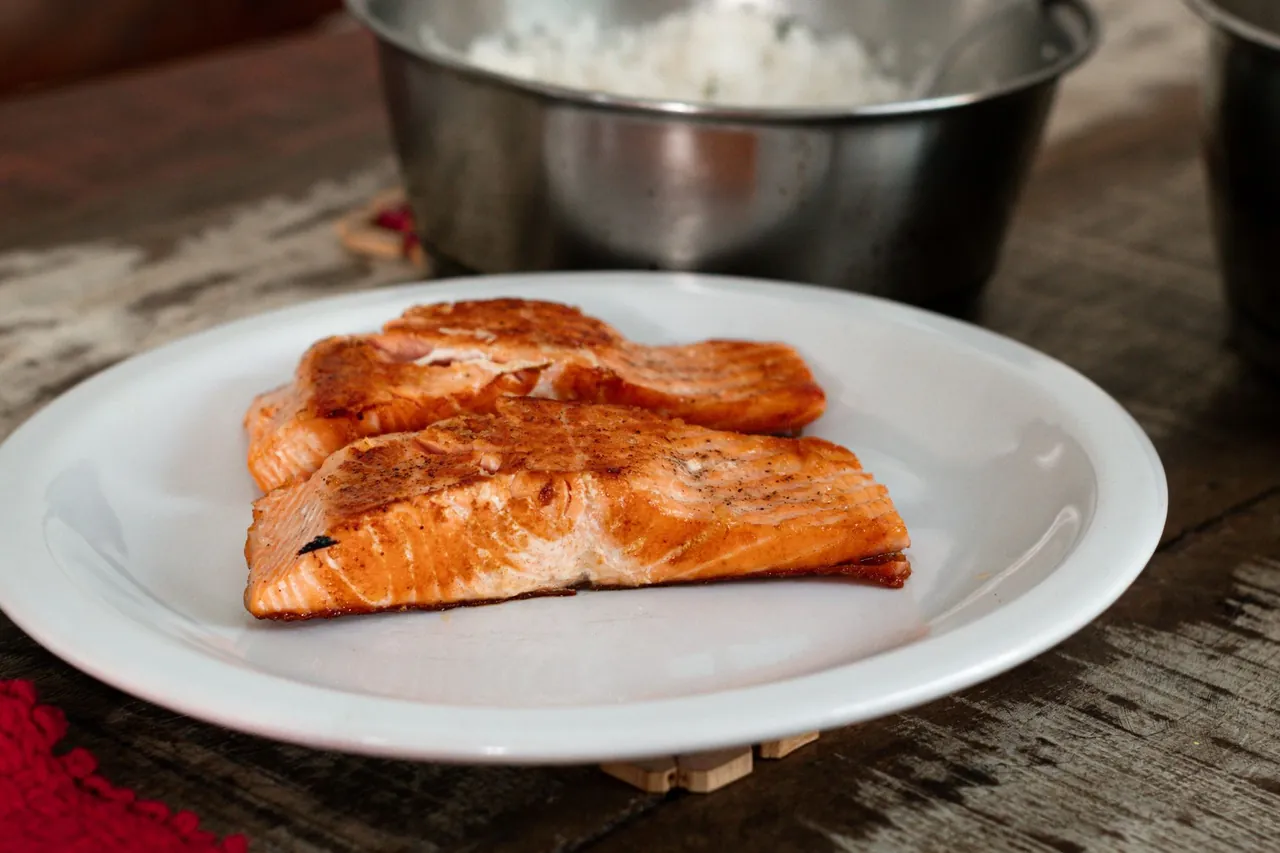
Cooked salmon: how to make it safe
The AKC’s steps:
- Remove all bones. Salmon has “small, brittle bones that could pose a choking hazard.”
- Cook it plain. “Cook salmon plain (baked, steamed, or grilled) without seasoning, oils, or sauces.”
- Cook it through. Salmon “should reach an internal temperature of 140 degrees Fahrenheit before serving.”
- Skip smoked salmon, and choose low-sodium if you use canned.
As for how often, the AKC says “you shouldn’t feed your dog prepared salmon more than once a week.” Count it within the daily treat budget; the free Dog Feeding Calculator gives your dog’s number.
Raw salmon and salmon poisoning disease
Raw salmon carries more than ordinary germs. Salmon, trout and Pacific giant salamanders can carry a fluke (VCA names it Nanophyetus salmincola), which in turn carries Neorickettsia helminthoeca, the organism behind salmon poisoning disease. Dogs become infected, Merck explains, “by eating raw or undercooked trout, salmon, or Pacific giant salamanders.”
- Where: Merck gives the range as “from northern California to Alaska.” VCA says the disease is most commonly seen in Washington, Oregon, northern California and southern Vancouver Island.
- When signs start: about 5 to 7 days after a dog eats infected fish, per Merck, and sometimes as late as 33 days. The AKC says signs can appear within seven days.
- Early signs: “high fever followed by weakness and complete loss of appetite,” according to Merck.
- How serious: Merck says that “without treatment, up to 90% of affected dogs die within 7–10 days.” The AKC also cites 90% of untreated cases. VCA gives no percentage, but its wording is just as stark: if untreated, “most dogs will die within two weeks.”
- Treatment: Merck says it “involves early use of IV (intravenous) antibiotics and supportive care.”
Prevention, in Merck’s words, “is based on avoiding feeding dogs raw or undercooked salmon, trout, or similar fish.” VCA puts it plainly: “Do not allow your dog to eat raw fish or salamanders.”
If your dog ate raw salmon: call your vet now
Don’t wait for a fever. The AKC’s instruction is to contact your veterinarian immediately if your dog eats raw salmon. Tell your vet what was eaten, roughly how much, when, and where the fish came from, since the disease is concentrated on the Pacific coast. Then watch for fever, weakness or a dog who won’t eat over the following weeks, and call again if any of those appear.
The free pet poison emergency card keeps your vet’s number where you can find it fast.
More fish and lean protein
Plain cooked shrimp has its own rules, covered in the shrimp guide. Tuna and plain chicken have guides too, and anything else can be looked up in the checker.
Frequently asked questions
- Can dogs eat raw salmon or sushi?
- No. The AKC says raw salmon is not safe for dogs, and VCA's advice is not to let your dog eat raw fish at all. Raw or undercooked salmon, trout and similar fish can carry the fluke that causes salmon poisoning disease, which Merck says kills up to 90% of affected dogs within 7 to 10 days without treatment. If your dog ate raw salmon, call your vet now.
- What are the signs of salmon poisoning in dogs?
- Merck lists high fever followed by weakness and complete loss of appetite as the early signs. They appear about 5 to 7 days after a dog eats infected fish, and can take up to 33 days; the AKC says signs can appear within seven days. Call your vet at the first sign, and mention the raw fish.
- Can dogs eat canned salmon?
- The AKC says to choose low-sodium canned salmon. Serve it plain, check for bones, and treat it like any other salmon: an occasional extra, no more than once a week.
- How often can my dog eat salmon?
- The AKC says you shouldn't feed your dog prepared salmon more than once a week. Keep it plain, boneless and fully cooked, and count it within the treat budget.
Educational content only — not veterinary or professional behavior advice. Consult your vet, or a certified trainer or behaviorist, for your pet. Read the full disclaimer →