Can Dogs Eat Watermelon?
A hydrating, low-calorie summer treat most dogs love — as long as the rind and seeds go in the trash first.
On this page
Yes — dogs can eat watermelon, as long as you remove the rind and the seeds. The pink flesh is a hydrating, low-calorie summer treat that most dogs happily take, and at roughly 92% water it’s about as light as a treat gets. Our free Dog Toxic-Foods Checker lists watermelon (no seeds or rind) as Safe for exactly that reason: “A hydrating summer treat; remove the seeds and rind.” Cut the flesh off, ditch the rind and seeds, and you’re done.
The rest of this is the detail — why the rind matters more than the seeds, how much is sensible, and how to turn a bowl of watermelon into a cheap hot-weather win.
Why watermelon is a good hot-weather treat
Watermelon flesh is mostly water, which is the whole appeal on a hot day: it’s cooling, it’s genuinely refreshing, and it delivers a treat’s worth of enjoyment for very few calories. It also carries some vitamins A, B6, and C plus a little fibre. As with every fruit, those nutrients are a nice bonus rather than the point — your dog’s complete food already covers their needs — but the low calorie count means watermelon is a smart pick for a dog watching their weight, and the AKC lists it among the fruits dogs can safely eat.
The catch with watermelon isn’t the flesh at all. It’s the two parts you cut away.
The catch: rind and seeds
The rind is the real hazard, and it’s a mechanical one rather than a poisoning. That firm green shell is hard to chew and hard to digest, and a dog who bolts a chunk can choke on it or, worse, end up with an intestinal blockage — a surgical emergency. So the rind goes in the trash, and your dog never gets to treat it as a chew toy, however much they’d like to.
Seeds are the smaller concern. The soft white seeds in seedless watermelon are harmless. The hard black seeds won’t poison your dog either, but a mouthful of them can add up to a blockage in a small dog, so buy seedless or pick them out. If a few slip past, don’t panic — it’s the big seedy slice left within reach that causes problems, not the odd stray seed.
Rank the risks and it’s simple: rind first, seeds a distant second, flesh not at all.
How much watermelon, and how to serve it
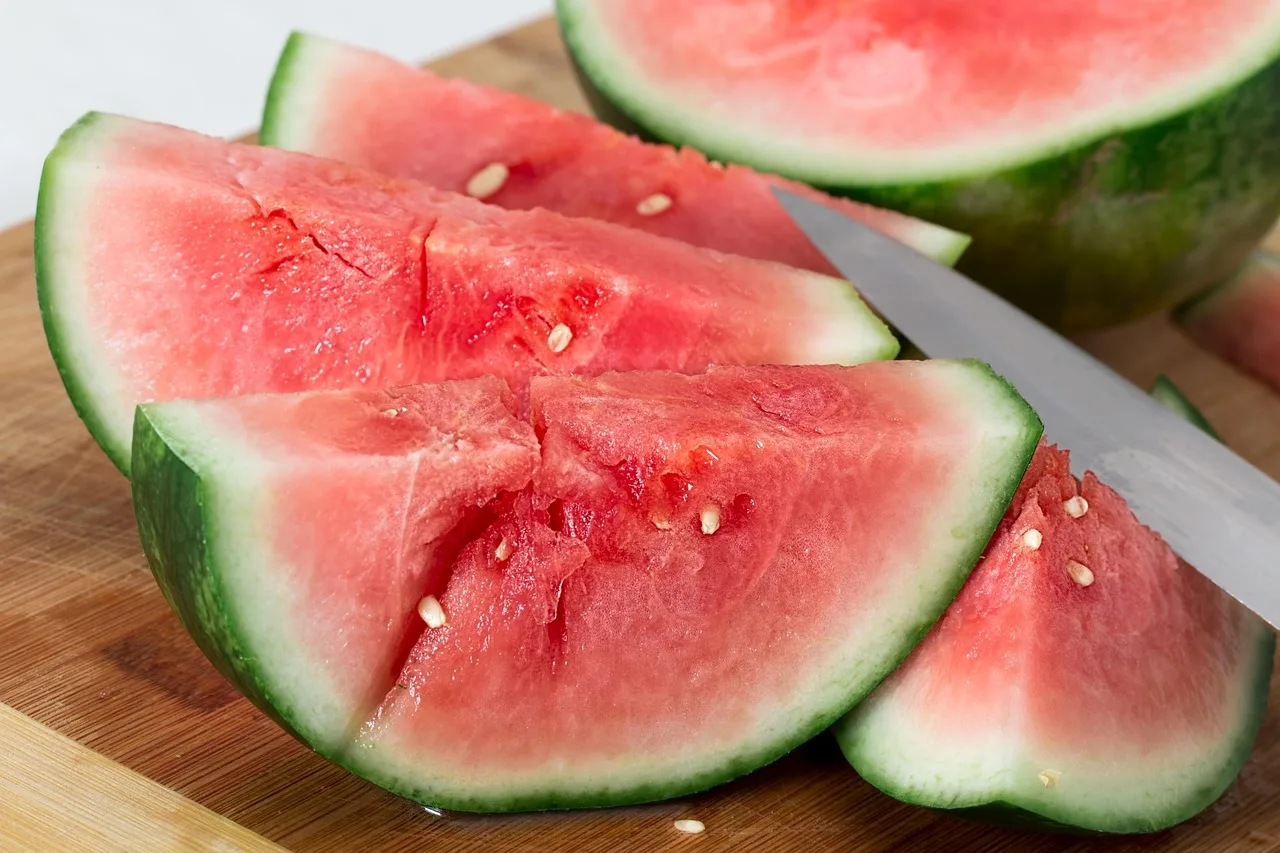
Cut the pink flesh cleanly away from the rind, pick out any hard seeds, and dice it to a size your dog can chew — small cubes for small dogs. A couple of small cubes for a little dog and a few for a big one is plenty, kept inside that 10% treat budget.
Because it’s watery and low-calorie, watermelon is a rare treat you can be a bit relaxed about on portion — but not on digestion. A large first serving of watery, fibrous fruit is a classic cause of loose stools, so start small and let your dog’s gut adjust. Frozen watermelon cubes are the obvious summer move: cheap, cooling, and slow to eat. Blend some flesh and freeze it into a stuffable toy for a longer hot-day project.
Skip anything beyond plain flesh. Watermelon-flavoured candy, sweetened fruit cups, and anything with added sugar aren’t watermelon in the way that matters — and “sugar-free” products can hide xylitol, which is genuinely toxic to dogs. Fresh flesh you cut yourself is the safe version.
When to check with your vet first
For a healthy dog, a little watermelon is about as low-stakes as treats get. But watermelon does contain natural sugar, so if your dog has diabetes or is on a vet-directed diet, ask your vet before adding fruit of any kind — VCA and AVMA both put diet changes for dogs with medical needs in the vet’s hands. And if your dog got into a rind or a big seedy chunk and you’re seeing vomiting, straining, or a tender belly, that’s a call to make sooner rather than later; our Dog Toxic-Foods Checker lists the ASPCA and Pet Poison Helpline numbers alongside dozens of verified food verdicts.
A cheap summer treat that’s hard to beat
Watermelon sits nicely in a rotation with other checker-verified safe options like apple, blueberries, and carrots — cheap, light, and easy to portion, so a hot afternoon of small treats doesn’t dent the calorie budget the feeding calculator gives you. Cut away the rind and seeds, keep the pieces small, run anything new through the checker first, and the flesh is all yours to share.
Frequently asked questions
- Are watermelon seeds bad for dogs?
- The soft, pale, immature seeds in a 'seedless' watermelon are harmless in the small numbers that slip through. The concern is the hard, mature black seeds: they won't poison your dog, but if a dog eats a lot of them they can add up to an intestinal blockage, especially in a small dog. That's a mechanical risk, not a toxic one, so the sensible policy is to buy seedless watermelon or pick the seeds out before serving. If your dog swallowed a few by accident, it's almost never a problem — just don't hand over a big seedy slice to gnaw on.
- Can dogs eat watermelon rind?
- No — leave the rind off. It isn't toxic, but the tough green rind is very hard to digest and is a genuine choking and intestinal-blockage risk, particularly for dogs who gulp. Obstructions are a surgical emergency, so this is the part of the watermelon worth taking seriously. Cut the pink flesh cleanly off the rind and throw the rind away rather than letting your dog treat it as a chew. If your dog did swallow a chunk of rind and you notice vomiting, straining, or a painful belly, call your vet.
- How much watermelon can a dog have?
- Watermelon is about 92% water and low in calories, so it's one of the more forgiving fruit treats — but the 10% rule still applies: treats of all kinds should stay within about 10% of your dog's daily calories. In practice that means a couple of small seedless cubes for a small dog and a few for a large one. The thing to watch isn't calories so much as digestion: a big serving of watery, fibrous fruit can cause loose stools, so start small and build up. Our free feeding calculator gives you the daily calorie number that makes the budget concrete.
- Is frozen watermelon safe for dogs?
- Yes, and it's one of the best cheap summer treats going. Freeze bite-sized pieces of seedless, rind-free flesh and you've got a cooling, low-calorie snack that takes a while to eat. Two small cautions: very hard-frozen chunks can be tough on teeth, so keep the pieces small for enthusiastic chewers, and let a rock-solid cube soften for a minute if your dog has dental issues. Frozen watermelon blended and refrozen in a stuffable toy also makes a longer-lasting hot-day project.
Educational content only — not veterinary or professional behavior advice. Consult your vet, or a certified trainer or behaviorist, for your pet. Read the full disclaimer →