Dog Commands List: 20 Cues in the Order to Teach Them
Which commands to teach first, and why the order matters. The 20 everyday cues, from sit to an emergency recall, with how to teach the key ones and the session rules that make them stick.
On this page
Teach your dog the foundation cues first (sit, down, stand, stay and wait), then come, look at me and touch, and build the rest on top: leave it, drop it, off, heel, place, settle, quiet and a few useful extras, with an emergency recall as the safety net. That is the order the Dog Training Commands Guide uses for its 20 everyday cues, and it follows a simple idea: each cue makes the next one easier. Here is the list, the reasons for the order, and how to teach the key ones with rewards.
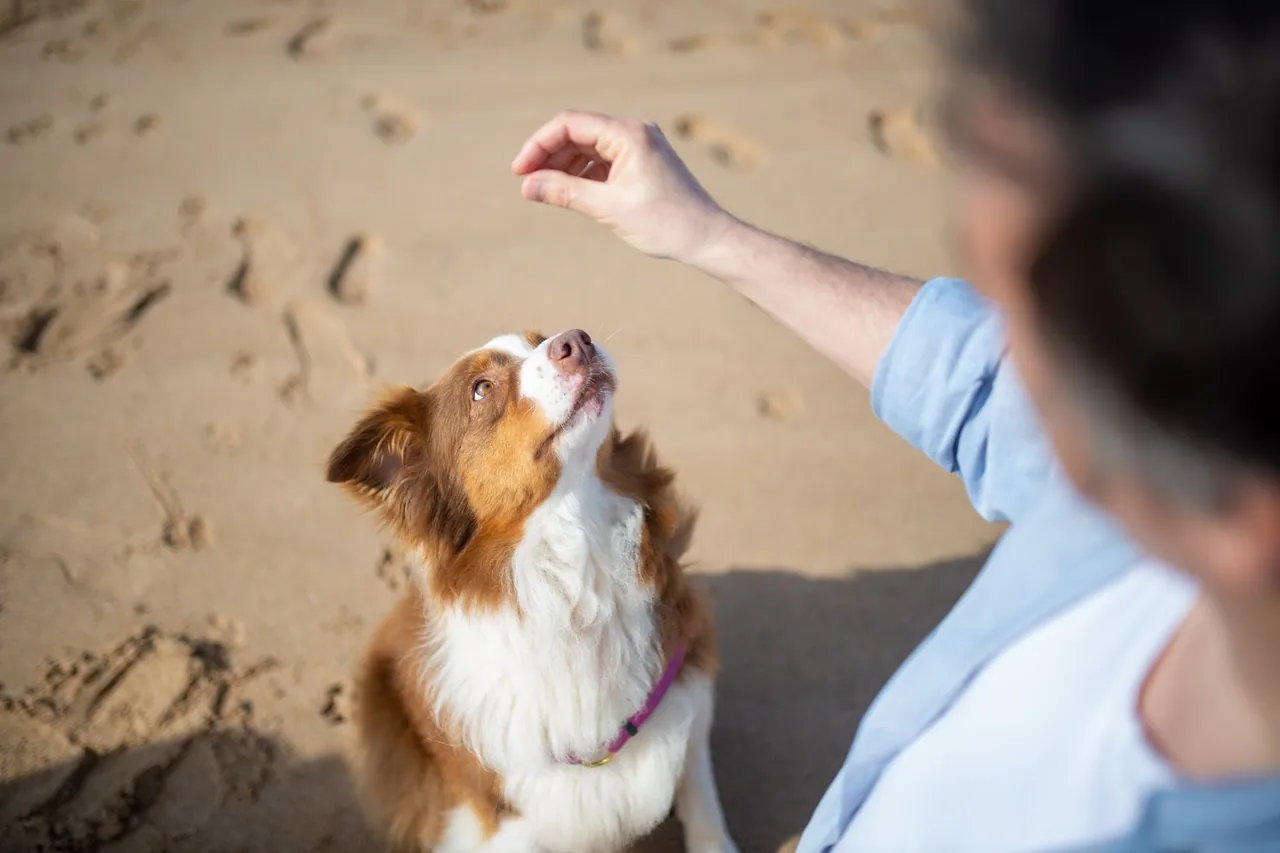
The 20 cues, in order
Foundation: sit, down, stand, stay, wait. These are positions and holds. Sit comes first because it is the easiest to lure and becomes the starting point for almost everything else. Stay asks your dog to hold a position through time, distance and distraction until you release it; wait is a short pause, such as at a door, before the next thing happens.
Core: come, look at me, touch. Come is the everyday recall. Look at me (or “watch”) teaches your dog to check in with your face, and touch, a nose bump to your open palm, gives you a way to move your dog anywhere without pulling.
Focus: leave it, drop it, off. Leave it means turn away from that; drop it means let go of what’s in your mouth; off means four paws on the floor. Together they cover most of the moments that go wrong around food, toys and visitors.
Manners: heel, place. Heel (or “with me”) is walking at your side on a loose leash. Place sends your dog to a mat to relax.
Calm: settle, quiet. Settle asks your dog to switch off and go soft on the mat; quiet buys a moment of silence after a bark.
Useful: back up, spin, shake, crate up. Small, practical skills: stepping back out of a doorway, a turn on cue, a paw for the vet, and walking into the crate on its own.
The safety net: emergency recall. A separate, special word you never use for anything else.
The free dog commands chart lists all 20 with the word to say, a hand signal described in words and what “done” looks like, so everyone in the house uses the same cues.
How to teach the key cues
Sit. Hold a treat at your dog’s nose and move it slowly up and a little back over the head; as the nose lifts, the rear folds down. The moment it lands, mark “Yes” and feed while your dog is still sitting. Add the word once your dog follows the lure smoothly, and never push on the hips.
Stay. From a sit or down, show a still, palm-out hand and pay your dog for holding, right where it is, before it moves. Then add one thing at a time: a longer pause, then a step of distance, then a mild distraction. Return to your dog to reward; the pay happens in position.
Come. Start a few feet away, crouch, open your arms and say your dog’s name plus “come” once. Back up a step as your dog comes, so it feels like a game, then deliver several treats in a row. The AKC’s key rule: always reward the come, whatever your dog was doing before, and never call your dog for something it dislikes. The reliable recall guide goes further.
Look at me. Bring a treat from your dog’s nose up to the bridge of your own nose; mark the moment your dog’s eyes meet yours, and pay. Then pay from the other hand, and stretch the hold slowly.
Leave it. Put a boring treat under a closed fist and say nothing. The instant your dog pulls its nose away, mark and pay from the other hand with something better. Progress from fist, to open hand, to the floor, adding “leave it” as your dog gets it.
Drop it. In gentle play, offer a treat or an equal toy right at your dog’s nose; when it lets go, mark, pay, and hand the first toy back so dropping never ends the fun.
Emergency recall. Pick a word you will use only for emergencies. Say it once and immediately produce a jackpot of amazing food, several times a day for a couple of weeks, with no recall asked. Only then start using it on a long line. VCA suggests rehearsing it a few times a week afterwards, with 10 to 20 treats scattered at your feet.
The session rules that make cues stick
- Short sessions: three to five minutes, a few times a day, ending on a win.
- One word, said once. Repeating a cue only teaches your dog to wait. If you need to repeat it, the setting is too hard; make it easier.
- A marker word. A crisp “Yes!” (or a clicker) marks the exact right moment; pay within about a second.
- Match the pay to the job. Easy work at home earns everyday treats; a hard recall in the park earns something special.
- Lure, then fade. Fade the food into the same-shaped empty-hand signal within a few sessions, and pay from your other hand so the food stops being the target.
- Don’t poison a cue. If a word reliably predicts something your dog dislikes, it stops working (AKC). Keep every cue a promise of good things.
Rewards, not corrections
The AVSAB recommends reward-based methods for all dog training and advises against aversive tools and punishment, which it links to stress, fear and later aggression. In practice that means paying the right answer, making the next step easier after a mistake, and never forcing a position. If your dog seems fearful or shuts down during training, stop and talk to a reward-based trainer or your vet.
Frequently asked questions
- What are the basic dog commands?
- The foundation most trainers start with is sit, down, stand, stay and wait, followed by come, look at me and touch. From there, leave it, drop it, off, heel and place cover most of daily life, and settle and quiet help a dog switch off.
- Which command should I teach first?
- Sit. It is the easiest to lure, it gives your dog a polite default to offer, and it is the starting position for stay, down and many other cues. Teach it first, then build the rest of the foundation on it.
- How long should a training session be?
- Short. Three to five minutes, a few times a day, ending while your dog still wants more. Many short sessions teach more than one long one.
- Should I use hand signals or words?
- Both. When you teach with a lure, your hand’s motion becomes the signal; fade the food from that same motion within a few sessions. Then say the word once, just before your hand moves, so the word comes to predict it.
- Do I need to correct my dog when it gets it wrong?
- No. The AVSAB recommends reward-based methods for all dog training and advises against aversive methods. If your dog gets it wrong, make the next try easier and pay the right answer.
Educational content only — not veterinary or professional behavior advice. Consult your vet, or a certified trainer or behaviorist, for your pet. Read the full disclaimer →