Dog Commands Chart
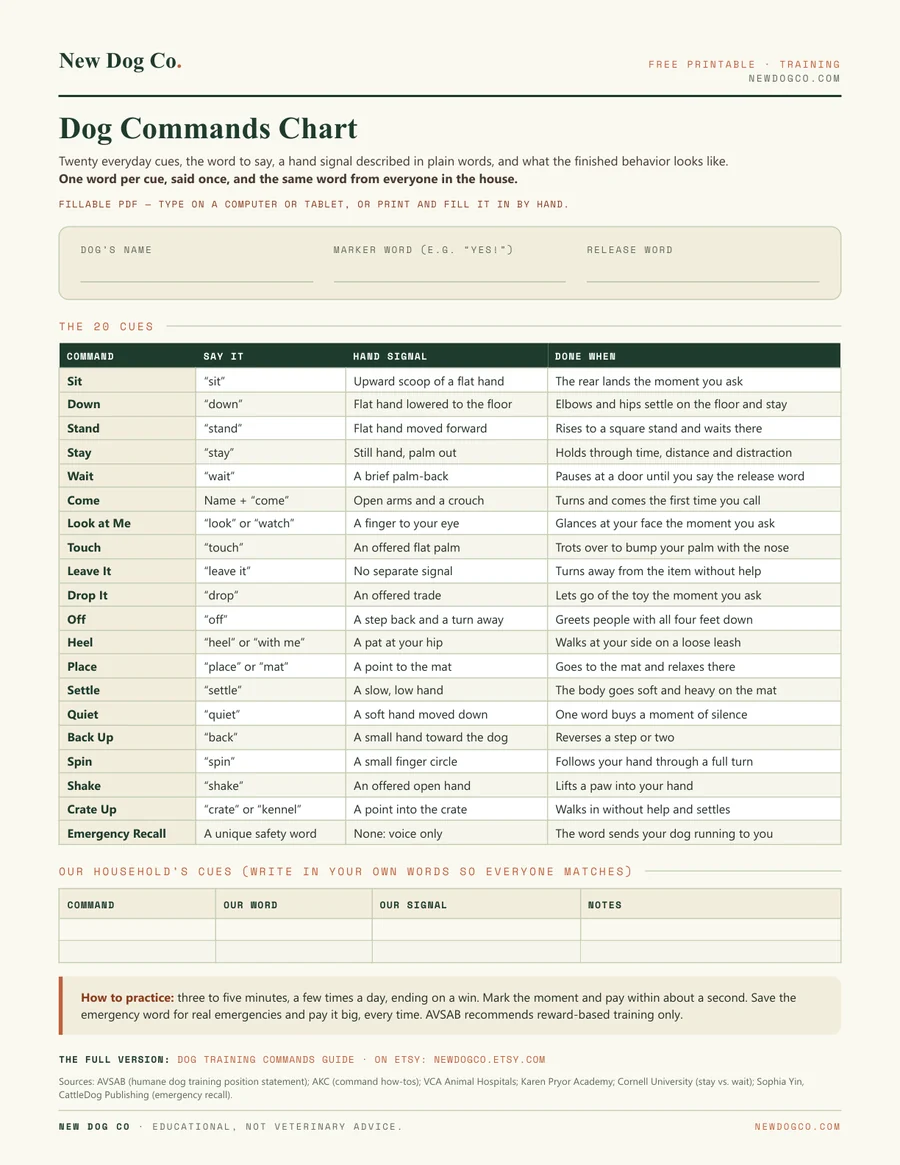
A dog commands chart keeps everyone in the house saying the same word for the same thing, which matters more than which words you pick. This one-page chart lists 20 everyday cues, from sit and down to leave it, place and an emergency recall. For each one it gives the word to say, a hand signal described in plain words, and what the finished behavior looks like. The cues and signals are the ones the Dog Training Commands Guide teaches step by step, and the method follows the reward-based approach the American Veterinary Society of Animal Behavior recommends.
Fillable · bilingual EN/ES · vet-sourced, not a scanned template.
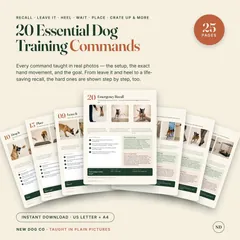 Got the free sheet? The full version → Dog Training Commands Guide
What's inside
- 20 everyday cues in teaching order, from sit to the emergency recall
- For each cue: the word to say, a hand signal described in words, and what done looks like
- Fillable boxes for your dog’s name, marker word and release word
- A household table, so everyone uses the same words and signals
- The session rules: three to five minutes, end on a win, pay within about a second
How to use it
- Fill in your marker word and release word, then post the chart where everyone in the house will see it.
- Teach one cue at a time, in the chart’s order, in sessions of three to five minutes.
- Lure first, then fade the food so your empty hand becomes the signal, and say the word just before the hand moves.
- Write any cue your family changes into the household table, so nobody mixes up the words.
Sources
Vet-sourced: the facts on this sheet come from these sources. It is educational, not veterinary advice.
- AVSAB (humane dog training position statement)
- AKC (command how-tos)
- VCA Animal Hospitals
- Karen Pryor Academy
- Cornell University (stay vs. wait)
- Sophia Yin, CattleDog Publishing (emergency recall)
Published
New printables + calm, sourced dog-care tips
Join the Pack and the 25-printable bundle is your instant thank-you — then we email new printables and short, vet-sourced tips as they’re ready. A few times a month, no spam.
The 25-printable pack lands instantly — new printables and tips follow. Unsubscribe anytime. Privacy Policy.Frequently asked questions
- Which dog commands should I teach first?
- Start with the foundation: sit, down, stand, stay and wait. Then add come, look at me and touch, which make the rest easier. The chart lists the 20 cues in the order the Dog Training Commands Guide teaches them, ending with the emergency recall.
- Should I use hand signals or words?
- Both, and they grow out of each other. When you teach with a treat lure, your hand’s motion becomes the signal: fade the food from that same motion within a few sessions and the empty hand carries the cue. Then say the word once, just before the hand moves, so the word comes to predict it.
- What is the difference between stay and wait?
- Stay asks your dog to hold a position through time, distance and distraction until you release them. Wait is a short pause, often at a door, before the next thing happens. Both end with your release word, so your dog always knows when they are free.
- What is an emergency recall?
- A separate recall word saved for real emergencies. You charge it before you ever need it: say the word and immediately give a jackpot, several times a day for about two weeks, with no recall asked. Never use it before something your dog dislikes, like a bath, and pay it big every time, so the word stays worth running for.
- Do I need to correct or punish my dog to teach commands?
- No. The American Veterinary Society of Animal Behavior recommends reward-based training only. Mark the right moment, pay it, and make the next step easier if your dog gets stuck.
Free educational printable. Not veterinary advice, and not a substitute for your vet's official records or an emergency call. Full disclaimer → · Leer en español →