Food-Bowl Guarding in Dogs: What to Do
A dog who stiffens, growls or snaps over the bowl isn’t being dominant. It’s worried about losing something it values. The early signs, the old advice that makes it worse, and the safe way forward.
On this page
Food-bowl guarding is a dog protecting something it values, and the safe response is management plus slow trust-building, never confrontation. Feed your dog behind a gate, never take the bowl away mid-meal, never punish a growl, and keep children away from a dog that is eating. Then, ideally with a certified behaviorist, teach your dog that people near the bowl mean good things are coming. The American Veterinary Society of Animal Behavior (AVSAB) and VCA Animal Hospitals both describe this approach.
Guarding isn’t dominance or spite. VCA describes resource guarding as protecting valued things, which can be food, chews, toys, resting places or even people. It’s a normal dog behavior that becomes a problem when the warnings escalate.
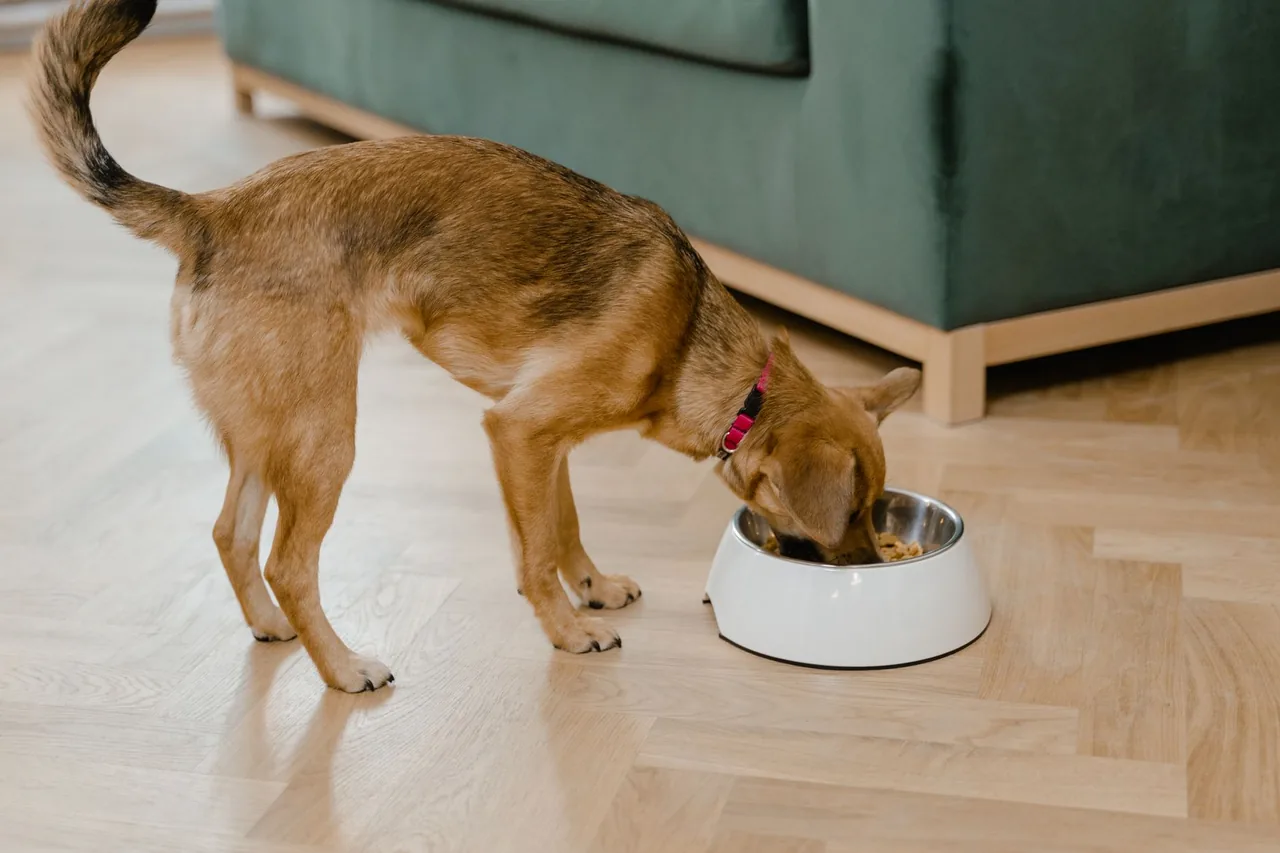
The warning ladder
AVSAB describes guarding as a set of signs that tend to climb if they’re ignored:
- Mild: freezing over the bowl, a hard sideways glance, eating faster, head lowered into the bowl.
- Moderate: growling, a lip quiver or lifted lip, showing teeth, snapping.
- Severe: biting anyone who approaches, or charging from another room when someone comes near the food.
VCA describes the same progression: stiffening, staring, freezing and gulping food, which can turn into growling, snapping and biting if the early signs are missed. The mild signs are easy to overlook, and that’s exactly why they matter. The free resource guarding warning signs chart puts the ladder on one page you can show everyone in the house.
What not to do
Don’t take the bowl away to prove a point. AVSAB warns that repeatedly removing food can teach a dog to defend it. From the dog’s point of view, the old “take it away and give it back” advice confirms that hands near the bowl mean losing the meal.
Don’t punish the growl. Cornell’s Riney Canine Health Center is clear: a dog punished for growling may learn to skip the warning and bite. The growl is information. Thank it, quietly, by backing off.
Don’t reach, scold or hit if your dog warns you. VCA advises walking away calmly and planning what to do next with a professional.
Keep everyone safe right away
Management works from day one, even before any training:
- Feed behind a gate or closed door in a low-traffic spot (VCA).
- Pick up the empty bowl after meals, and skip the chews your dog guards most for now (VCA).
- Children never approach a dog that is eating, resting or holding a chew or toy (VCA).
- Never leave young children alone with any dog. VCA notes that children under 6 are often bitten around food or a dog’s possessions.
This isn’t giving in. It removes the situations that keep rehearsing the behavior, so training has a chance to work.
Building trust, with a professional
The exercises below are the kind VCA describes. Work through them with a professional rather than alone, especially if your dog has growled, snapped or bitten:
- Walk past and toss. From a distance where your dog shows no warning signs, walk past while it eats and toss a better treat toward the bowl, then keep walking. Over sessions, get a little closer.
- Trade up. Offer something better in exchange for an item, and let the dog keep the trade. VCA says trades are for adults only, and you never take the item in front of the dog.
- Teach “give” or “drop” with low-value objects and high-value rewards, so letting go becomes a good deal.
AVSAB recommends getting professional help before any exercises if your dog growls, snarls, snaps or lunges near the bowl, and a veterinary behaviorist if guarding appears during trades. The goal is a dog that feels relaxed when people are near its food, not one that has learned to tolerate being challenged.
When to see your vet first
If guarding starts suddenly, or your dog’s appetite has changed, AVSAB suggests a vet check. Pain or illness can make any dog more protective. If guarding involves young children in the home, supervise or separate them now and get help.
For more on reading the signals that come before a growl, see how to read your dog’s body language.
Frequently asked questions
- Should I take my dog’s food away while it eats so it learns I’m in charge?
- No. AVSAB warns that repeatedly taking food away can teach a dog to guard it defensively, and VCA advises never removing the bowl or food while a dog is eating.
- My dog growled at me over its bowl. Should I correct it?
- No. Cornell’s Riney Canine Health Center stresses never punishing a growl: a dog punished for warning may skip the warning and bite. Walk away calmly and plan next steps with a professional.
- Is food guarding dangerous for kids?
- It can be. VCA notes that children under 6 are often bitten around food or a dog’s possessions. Children should never approach a dog that is eating, resting or holding a chew or toy, and young children should never be left alone with any dog.
- Who can help with resource guarding?
- For growling, snarling, snapping or lunging near the bowl, AVSAB recommends a Certified Applied Animal Behaviorist or a board-certified veterinary behaviorist, before you try any exercises. If the guarding is new or appetite has changed, see your vet first.
Educational content only — not veterinary or professional behavior advice. Consult your vet, or a certified trainer or behaviorist, for your pet. Read the full disclaimer →