How to Stop a Dog Pulling on the Leash
Pulling isn’t stubbornness; it’s a strategy that keeps paying off. The stop-and-reward method that changes it, the gear that helps and the gear to avoid, and how long it really takes.
On this page
To stop a dog pulling on the leash, make pulling stop the walk and make a loose leash pay. When the leash tightens, stand still. The moment it slackens, mark it with “Yes!”, give a treat or two at your leg and take a step or two forward. VCA Animal Hospitals describes this method, and the American Veterinary Society of Animal Behavior (AVSAB) recommends reward-based training only. Expect it to take months of short, regular practice, not one weekend.
Pulling makes sense from your dog’s side of the leash. It gets them to the interesting smells faster, and every step forward rewards it. The fix is to change what works.
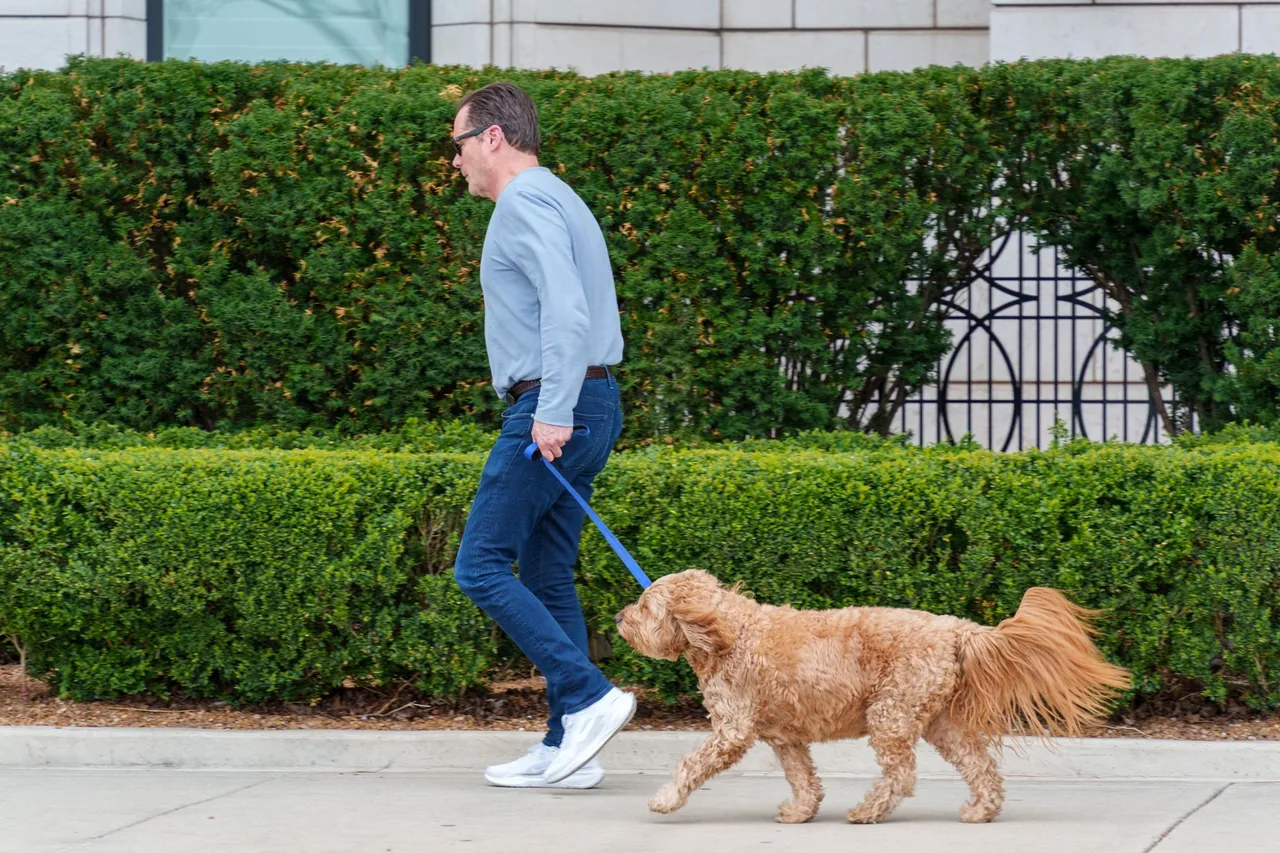
The stop-and-reward method
VCA’s approach is simple to describe and takes patience to do:
- Leash tightens? Stand still. Don’t pull back, jerk the leash or scold. Just stop being a moving object.
- First bit of slack: say “Yes!”, give one or two treats right beside your leg, then take one or two steps.
- Repeat. Every tight leash stops the walk; every loose leash restarts it with a reward.
- Early on, pay often. VCA suggests rewarding at nose level every 2–3 seconds as you walk a few steps, so your dog learns where the good stuff happens.
The AKC describes a loose leash as one that hangs in a J shape. That’s what you’re looking for, not a dog glued to your knee.
Use what your dog actually wants
Treats aren’t the only reward. The AKC suggests letting your dog sniff as a reward for a stretch of loose-leash walking. “Go sniff” after ten calm feet is a powerful paycheck, and it makes walks more enjoyable for your dog too.
Set up for success
- Start somewhere boring, indoors or in a quiet yard, and add distractions slowly (VCA).
- Exercise or play first so your dog isn’t bursting with energy (VCA).
- Keep sessions short: a few minutes, a few times a day (VCA).
- Use a 6–10 foot leash, and skip retractable leashes (VCA).
The free loose-leash walking log gives you the method on one page and a place to score each session from 0 to 5, so you can see progress over weeks instead of judging one bad walk.
Gear that helps, and gear to avoid
Helps: VCA says front-clip harnesses can reduce pulling, though some press on the shoulders, so fit matters. Head halters also work, but need to be introduced gradually and used with a backup leash. A flat collar should fit with 2–4 fingers underneath; if your dog coughs when pulling on a collar, a collar alone isn’t suitable.
Avoid: AVSAB’s position is that aversive methods should not be used, and it links them to fear, anxiety, stress and aggression and to a worse bond with you. VCA notes that slip, choke, prong and shock collars rely on pain and can teach a dog to connect that pain with people or other dogs, and that choke and prong collars can damage the windpipe and raise pressure in the eyes.
How long does it take?
VCA says most dogs need several months of regular practice. You’ll usually see good stretches on quiet streets long before your dog can walk calmly past a squirrel. That’s normal. Track the trend, not the single walk.
When pulling is something more
If your dog lunges, barks or chases on walks, especially at other dogs, people or bikes, that’s usually reactivity rather than simple pulling. VCA suggests asking your vet for a referral to a behavior professional. Why some dogs are reactive on leash but not off and the free reactive dog starter path are good places to start.
Two physical red flags are worth acting on straight away: coughing or gagging from collar pressure means switch to a harness, and limping or shoulder soreness in a no-pull harness means check the fit.
Frequently asked questions
- How long does it take to stop a dog pulling on the leash?
- VCA says most dogs need several months of regular practice. Short, frequent sessions in easy places, building up to distractions slowly, work better than long walks where the dog keeps pulling.
- Do prong, choke or shock collars stop pulling faster?
- The American Veterinary Society of Animal Behavior recommends reward-based methods only and links aversive methods to fear, anxiety and stress. VCA notes that choke, prong and shock collars rely on pain, and that choke and prong collars can damage the windpipe.
- Is a front-clip harness or a head halter better?
- Both can reduce pulling, according to VCA. A well-fitted front-clip harness is easy to start with, though some press on the shoulders, so fit matters. A head halter needs gradual introduction and a backup leash.
- What if my dog lunges and barks at other dogs on walks?
- That’s more than pulling. VCA suggests asking your vet for a referral to a behavior professional. Working below your dog’s threshold, explained in the reactive-dog guides on this site, is the usual starting point.
Educational content only — not veterinary or professional behavior advice. Consult your vet, or a certified trainer or behaviorist, for your pet. Read the full disclaimer →