Dog Separation Anxiety — A Complete, Force-Free Guide
What separation anxiety really is, how to tell it apart from boredom, and the gradual, reward-based treatment that works.
On this page
- What separation anxiety is
- What it isn’t: the look-alikes that matter
- How to tell for sure: video your dog when alone
- The real treatment: systematic desensitization, below threshold
- Why punishment and flooding backfire
- Management while you treat: don’t let the dog rehearse panic
- Enrichment: necessary, but not a cure on its own
- When medication and a veterinary behaviorist belong in the plan
- A realistic timeline
Separation anxiety is a real panic response to being left — not disobedience, spite, or a dog that never learned the rules. A dog with true separation anxiety experiences real fear when left alone or apart from the person they are bonded to, and that fear drives the barking, destruction, and accidents owners come home to. The good news, backed by the ASPCA and the veterinary behavior field, is that it is treatable. The core of treatment is gradual desensitization to absences, always kept below the threshold where panic begins — never punishment, and never forcing the dog to “just get used to it.”
This guide explains what separation anxiety is, how to distinguish it from problems that look similar, how to confirm it, the step-by-step force-free protocol, and when medication and a board-certified veterinary behaviorist belong in the plan.
What separation anxiety is
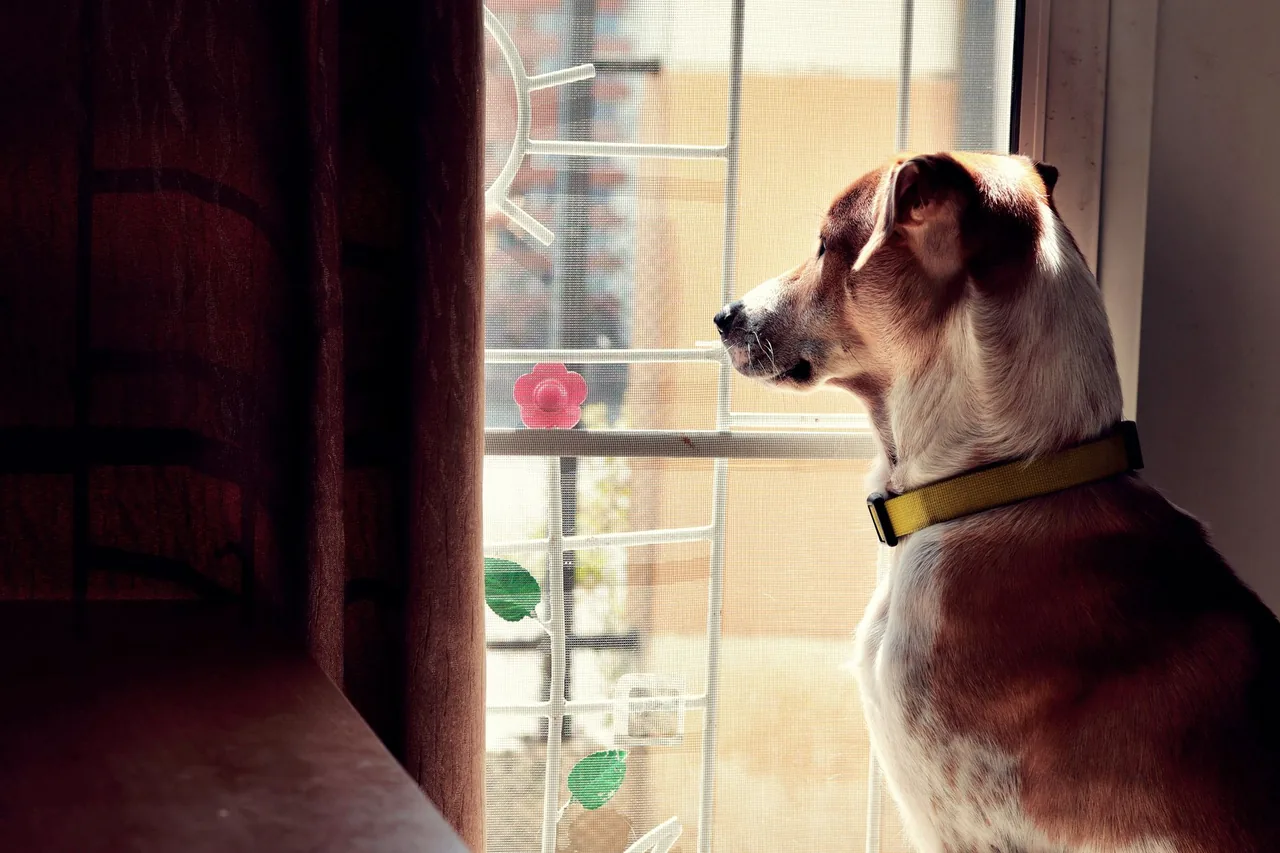
Separation anxiety is a distress response brought on by being separated from an attachment figure. It is not a training failure and it is not the dog “getting back” at you; spite is not a documented canine emotion, and the Merck Veterinary Manual describes these behaviors as products of anxiety, not defiance.
Signs typically appear within the first 15 to 30 minutes after you leave and often include:
- Vocalization — sustained barking, howling, or whining
- Destruction, frequently focused on exit points (doors, window frames, crates) rather than random chewing
- House soiling in a dog who is otherwise reliably house-trained
- Pacing, drooling, panting, trembling, or repetitive movement
- Escape attempts that can cause injury — broken teeth, torn nails, cut paws
- Frantic greeting and difficulty settling even after you return
A hallmark is that the distress is tied to your absence specifically, and often begins during pre-departure cues (picking up keys, putting on shoes) before you are even out the door.
What it isn’t: the look-alikes that matter
Getting the diagnosis right changes the entire plan. Several common problems mimic separation anxiety but need different handling.
Boredom and under-exercise
A young, high-drive dog left with nothing to do may chew, dig, or bark simply because they have unspent energy and no outlet. The tell: the behavior is exploratory and content, not frantic, and it improves markedly with more exercise, mental enrichment, and appropriate chew outlets. There is no panic — no drooling, no desperate escape attempts.
Isolation distress
Some dogs are distressed by being alone at all, but are perfectly calm as long as any companion — human or another dog — is present. True separation anxiety is usually bonded to a specific person, and company from someone else may not resolve it. The distinction guides whether a second dog, a sitter, or daycare could help.
Incomplete house-training
Accidents while you are out are not automatically anxiety. A dog who was never fully house-trained, or who cannot physically hold it that long, will soil regardless of emotional state. Look at whether the dog is otherwise reliable when you are home before attributing soiling to panic.
Medical and other causes
Urinary tract infections, gastrointestinal upset, cognitive decline in senior dogs, and noise phobias (a passing thunderstorm or fireworks) can all masquerade as separation issues. The AVMA and Merck Veterinary Manual both stress ruling out medical contributors first, which is one reason a veterinary exam is step one.
How to tell for sure: video your dog when alone
You cannot diagnose what you cannot see. The single most useful thing you can do is set up a phone or pet camera and record your dog during a real, short absence.
Watch for the timing and intensity. Panic that erupts within minutes, escalates, and centers on exits or on you leaving points to separation anxiety. A dog who noses around, chews a shoe, then curls up and sleeps is likely bored, not panicked. Bring this footage to your veterinarian — it is often more informative than any description, and it establishes the baseline you will measure progress against.
The real treatment: systematic desensitization, below threshold
The evidence-based core of treatment is systematic desensitization (gradually exposing the dog to absences in increments so small they never set off panic), usually paired with counterconditioning, which builds a positive association with being alone. The ASPCA and veterinary behavior literature both describe this as the foundation of recovery. It is not fast, but it works, and rushing it is the most common way it fails.
The non-negotiable rule: the dog must stay under threshold. Every rep should end while the dog is still calm. If you push to the point of distress, you are practicing panic, not curing it.
Step by step
- Neutralize the departure cues. Pick up your keys, put on your coat, then sit back down, repeatedly and at random times, until those cues stop predicting departure and stop provoking anxiety.
- Start with sub-second absences. Step to the other side of the door and return before the dog reacts. For a severe case, the starting duration may be a single second. That is normal and correct.
- Build in tiny increments. Extend the time away gradually — seconds, then short minutes — only when the current step is boringly easy. Vary the durations rather than always increasing, so absence never becomes predictably longer.
- Keep arrivals and departures low-key. Calm, undramatic comings and goings prevent the emotional spikes that fuel the cycle.
- Read the dog, not the clock. Progress at the dog’s pace. A bad rep means drop back to an easier duration, not push through.
Many owners do best with a structured plan from a professional, because reading threshold accurately is a skill and pacing errors set treatment back weeks.
Why punishment and flooding backfire
Separation anxiety is fear, and you cannot punish away fear — you can only add to it. Scolding a dog for the mess, using a shock or bark collar, or crating a panicking dog to “contain” the problem all increase the underlying anxiety and can create new fears. The AVSAB explicitly warns against aversive tools and punishment, noting they raise the risk of fear and aggression while doing nothing to resolve the emotion driving the behavior.
Flooding — deliberately leaving the dog alone for long stretches to force habituation — is equally counterproductive. Prolonged exposure to full-blown panic sensitizes the dog further, and repeated flooding can worsen the disorder. The entire point of the sub-threshold approach is to make flooding unnecessary.
Management while you treat: don’t let the dog rehearse panic
Desensitization only works if the dog is not being pushed over threshold in daily life between sessions. Every real episode of panic undoes progress, so during treatment the goal is to avoid leaving the dog alone longer than they can currently handle. Options include:
- A sitter, dog walker, or trusted friend to cover the hours you must be out
- Doggy daycare, if your dog relaxes around other people or dogs (isolation-distress dogs especially)
- Taking the dog with you where practical, or adjusting schedules so absences overlap with someone home
This “bridge” is temporary scaffolding, not the cure, but it protects your training investment and, just as importantly, spares the dog needless suffering.
Enrichment: necessary, but not a cure on its own
Enrichment lowers overall stress and gives a dog constructive outlets. Food-dispensing toys, snuffle mats, long-lasting chews, scent games, and adequate physical exercise all help, and for a boredom problem, they may be most of the solution. For true separation anxiety, though, enrichment is supportive, not curative: a food puzzle will not hold the attention of a dog in a panic state. Use enrichment to build a calmer baseline and to keep truly-alone time occupied once the dog can tolerate it, not as a substitute for desensitization.
When medication and a veterinary behaviorist belong in the plan
For moderate to severe cases, behavior modification alone can be an uphill battle, and medication is not a shortcut or a failure; it is standard, evidence-based care. Certain medications can lower a dog’s baseline anxiety enough that they can learn during desensitization. Two medications, the SSRI fluoxetine and the tricyclic clomipramine, have been studied specifically for canine separation anxiety and are approved for it, and other medications are used adjunctively. These are prescription medications that only a veterinarian can select, dose, and monitor; they are never bought or dosed on your own, and they work best combined with the behavior plan, not instead of it.
For complex, severe, or stalled cases, ask for a referral to a board-certified veterinary behaviorist (a Diplomate of the American College of Veterinary Behaviorists, DACVB), a veterinarian with advanced specialty training in behavior. They can confirm the diagnosis, build an individualized protocol, and manage medication with a precision general practice may not offer.
A realistic timeline
Separation anxiety improves over weeks to months, not days, and progress is rarely a straight line; setbacks are part of recovery, not proof of failure. What separates dogs that recover from dogs that don’t is usually consistency, patience, and staying below threshold, not talent or toughness. Start with a veterinary exam, video the behavior, treat gradually and kindly, and bring in medication and a specialist when the severity calls for it. This guide supplements your veterinarian’s care — it does not replace it.
Frequently asked questions
- How is separation anxiety different from boredom?
- Boredom produces content, exploratory chewing or digging that improves with more exercise and enrichment, and it comes without panic. Separation anxiety is real fear, with drooling, pacing, frantic escape attempts, and distress that starts within minutes of you leaving. Video footage of your dog alone is the clearest way to tell them apart.
- Will getting a second dog fix separation anxiety?
- Usually not. True separation anxiety is typically bonded to a specific person, so another dog often does not resolve it. A companion may help a dog with isolation distress — one who is upset being alone but fine with any company — which is a different problem. Confirm the diagnosis before adding a second dog for that reason.
- Is it okay to crate a dog with separation anxiety?
- Only if the dog is relaxed in the crate. For many anxious dogs, confinement intensifies panic and can cause injury from escape attempts, such as broken teeth and torn nails. Never use a crate to contain a panicking dog. Focus on desensitization and safe management instead, and ask your veterinarian if crating is appropriate for your dog.
- How long does it take to treat separation anxiety?
- Recovery typically takes weeks to months, not days, and it rarely moves in a straight line. Progress depends on keeping the dog below the panic threshold and building absence tolerance in tiny increments. Consistency and patience matter far more than speed, and setbacks are a normal part of the process.
- Does my dog need medication for separation anxiety?
- Not every dog does, but for moderate to severe cases medication is standard, evidence-based care, not a shortcut or a failure. Medications like fluoxetine and clomipramine can lower baseline anxiety enough that a dog can learn during training. Only a veterinarian can prescribe, dose, and monitor them, and they work best alongside the behavior plan.
- Can punishment stop the barking and destruction?
- No — separation anxiety is fear, and punishment only adds to it. The AVSAB warns that scolding, shock or bark collars, and other aversives increase fear and aggression without resolving the underlying anxiety. The behaviors you see are symptoms of panic, so the fix is reducing the fear, never punishing the dog for it.
- What is a veterinary behaviorist and when should I see one?
- A board-certified veterinary behaviorist (DACVB) is a veterinarian with advanced specialty training in animal behavior. Consider a referral for severe, complex, or stalled cases. They can confirm the diagnosis, design an individualized protocol, and manage medication with more precision than general practice typically allows.
Educational content only — not veterinary or professional behavior advice. Consult your vet, or a certified trainer or behaviorist, for your pet. Read the full disclaimer →