Helping a Leash-Reactive Dog: Distance, Thresholds, and Calm Practice
A plain, reward-based starting point for the barking, lunging, and spinning at the end of the leash.
On this page
If your dog barks, lunges, or spins at the end of the leash, you are not failing and your dog is not bad. Your dog is having a hard time, not giving you one. This is a plain starting point for what trainers call leash reactivity, built on reward-based methods only — and one piece of our complete guide to reactive dogs, which covers the whole topic end to end.
Reactive is not the same as aggressive
Reactivity is an over-reaction to a trigger: barking, lunging, or spinning out of proportion to what is actually happening. Most reactive dogs are not trying to hurt anyone. They are scared and want distance, or they are frustrated because the leash won’t let them say hi. Aggression — intent to harm — is a different thing, and ignored reactivity can drift toward it. That is exactly why working on it early matters.
There are two big drivers. Fear says “make it go away” — the dog wants more distance. Frustration says “let me AT it” — a social dog blocked by the leash. Same explosion, opposite wishes. Watching what your dog does off-leash (relaxed, or desperate to greet?) helps tell them apart — it’s also why so many dogs are calm off-leash but reactive the moment they’re clipped on — and your trainer will want to know.
Two things before you train a single rep
First, see your vet. Pain is the most-missed reason a dog “suddenly” reacts, and a sudden change in behavior is a medical question as much as a training one. This article is educational and not a substitute for veterinary or professional behavior help.
Second, a promise: no prong, choke, or shock tools. The American Veterinary Society of Animal Behavior (AVSAB) is unambiguous in its 2021 Humane Dog Training Position Statement — aversive tools increase fear, anxiety, and aggression risk, with no exceptions — and the AVMA backs reward-based methods. Pain on top of panic makes a worse dog, reliably.
And if there is any bite, near-bite, or escalation, bring in a credentialed professional now.
Threshold: the one idea that changes everything
Threshold is the distance at which your dog notices a trigger but can still think, eat, and respond to you. All learning happens under it. Nothing useful happens over it.
- Under threshold (the green zone): sees the trigger, can look away, takes treats normally, loose body. Train here, on purpose.
- At threshold (the edge): stiffening, staring, slower or snatchy treat-taking, ears locked forward. Add distance now — this is the last exit before the explosion.
- Over threshold (the red zone): barking, lunging, can’t eat, can’t hear you. No learning is possible. Leave calmly, go home, decompress. It is a data point, not a failure.
You adjust difficulty with the Three Ds. Distance is your main dial: more distance equals an easier dog. Duration is how long the trigger stays in view — short beats long. Distraction is intensity — a sleepy old dog across the street is easier than a bouncing puppy nearby. Change one dial at a time, never all three.
Read the early warnings
Reactivity looks sudden and almost never is — the real skill is learning to read your dog’s body language early. ASPCApro’s canine body language guidance and the Fear Free FAS spectrum describe the signs: the lock-on (still body, fixed stare, closed mouth), lip licks and yawns, “whale eye” (a white half-moon at the corner of the eye), weight shifting forward, or a dog making itself small. The treat test is a quick read — still taking food gently means you have time; snatchy or refusing means you don’t.
One rule above all, drawn from Kendal Shepherd’s escalation-ladder work (BSAVA): never punish a growl or any warning. Warnings are your early-alarm system. Punish them and dogs learn to skip them — that is how you get “he bit with no warning.” Respond to warnings with distance, not discipline.
Survive the walk first
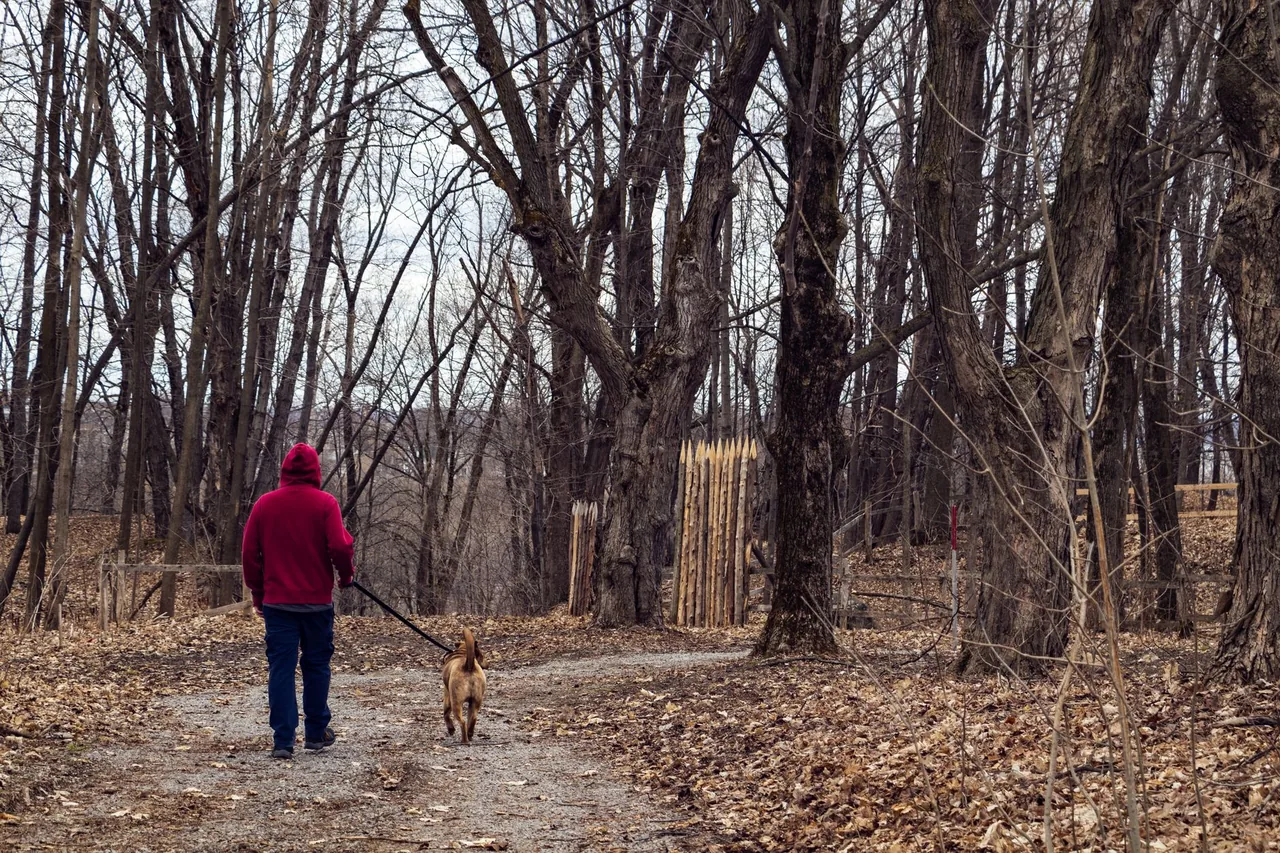
Management is not cheating; every avoided explosion is one less rehearsal of the behavior. Teach a cheerful U-turn at home until it is a reflex. Arc around triggers instead of walking straight at them. Use parked cars and hedges as visual shields. Toss a handful of treats in the grass as a trigger passes — sniffing is incompatible with exploding.
For gear: a front-clip harness, a fixed six-foot leash (not a retractable), and a treat pouch with real food like chicken or cheese, because kibble doesn’t outbid a trigger. A basket muzzle, trained slowly to mean “party hat,” is welfare, not shame — Cornell’s Riney Canine Health Center and The Muzzle Up Project both frame it as a positive skill.
Calm practice, kept honest
The backbone game is simple: trigger appears, chicken rains; trigger leaves, chicken stops. Done at an under-threshold distance, it changes what the trigger means. Keep sessions to five or ten minutes and end on a win. Three calm reps beat thirty frantic ones. Progress isn’t “never reacts” — it’s reacting later, recovering faster, at shorter distances, with more check-ins.
If you are bringing a reactive dog into a new home and want the calm, sourced foundations in one place, our First-Time Dog Owner Guide covers the early days without the noise. For owners working toward more advanced, task-focused training, the Service-Dog Training Guide is a companion next step.
And if you want the whole approach in one place — thresholds, the distance work, the gear, and the daily counterconditioning games laid out step by step — that’s exactly what our Reactive Dog Toolkit is built for: the calm, reward-based plan to actually work the problem, not just understand it.
Frequently asked questions
- Is a reactive dog the same as an aggressive dog?
- No. Reactivity is an over-reaction to a trigger — barking, lunging, or spinning out of proportion to the situation — and most reactive dogs are driven by fear (wanting distance) or frustration (a social dog blocked by the leash), not intent to harm. Aggression means intent to harm, which is different. Untreated reactivity can drift toward it, which is exactly why working on it early matters.
- What does keeping my dog 'under threshold' mean?
- Threshold is the distance at which your dog notices a trigger but can still think, eat, and respond to you. Under threshold your dog sees the trigger but takes treats and stays loose — the only place useful learning happens. Over threshold, a dog that is barking and lunging can't eat or hear you, so no learning is possible; the fix is more distance, not more pressure.
- Should I use a prong, choke, or shock collar for a reactive dog?
- No. The American Veterinary Society of Animal Behavior (AVSAB), in its 2021 Humane Dog Training Position Statement, is unambiguous that aversive tools increase fear, anxiety, and aggression risk, and the AVMA backs reward-based methods. Adding pain on top of panic reliably makes a worse dog, not a calmer one.
- What gear helps a leash-reactive dog?
- A front-clip harness, a fixed six-foot leash rather than a retractable, and a treat pouch with high-value food like chicken or cheese, because kibble rarely outbids a trigger. A basket muzzle, trained slowly so it predicts good things, is a welfare tool rather than a punishment — both Cornell's Riney Canine Health Center and The Muzzle Up Project frame it as a positive skill.
Educational content only — not veterinary or professional behavior advice. Consult your vet, or a certified trainer or behaviorist, for your pet. Read the full disclaimer →