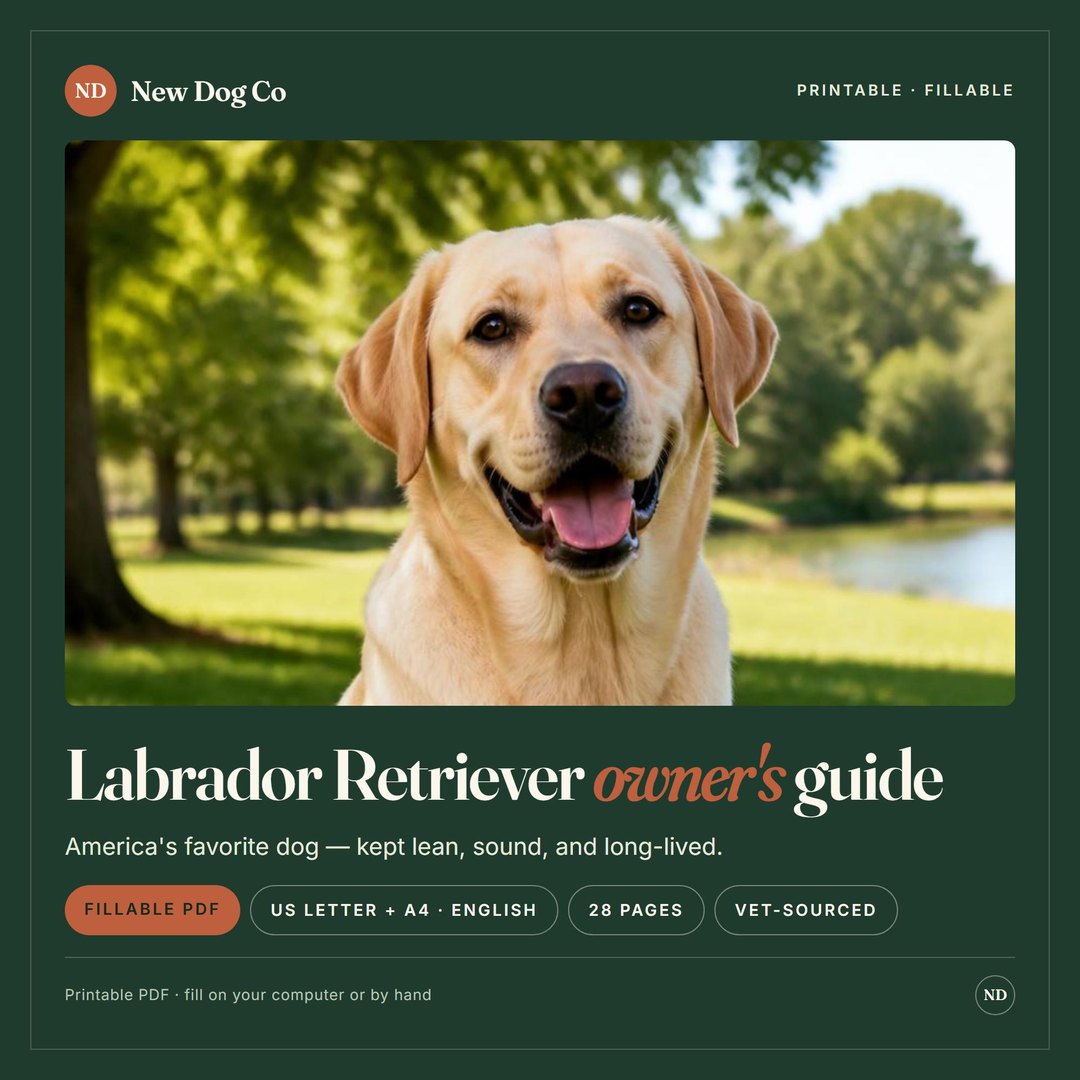
Is a Labrador Retriever right for you?
Labrador Retrievers are outgoing, gentle, and eager to please, which is exactly why they have long ranked among the most popular breeds and work as guide, service, and detection dogs. They typically get along with children, other dogs, and strangers, and they thrive on being part of daily family life. That temperament comes bundled with real demands.
Labs are high-energy and stay puppy-brained well past their first birthday. Without enough exercise and mental work, that energy turns into counter-surfing, chewing, and relentless attention-seeking. They are also intensely food-motivated, a trait breeders selected for and one that makes overfeeding dangerously easy.
The honest downsides: heavy shedding year-round, a big enthusiastic body that can knock over a toddler by accident, and a strong pull toward obesity if you don't manage food. If you want a calm, tidy, low-effort dog, a Lab is the wrong fit. If you want an athletic, affectionate partner and will do the work, few dogs are more willing partners.
Exercise, energy, and daily life
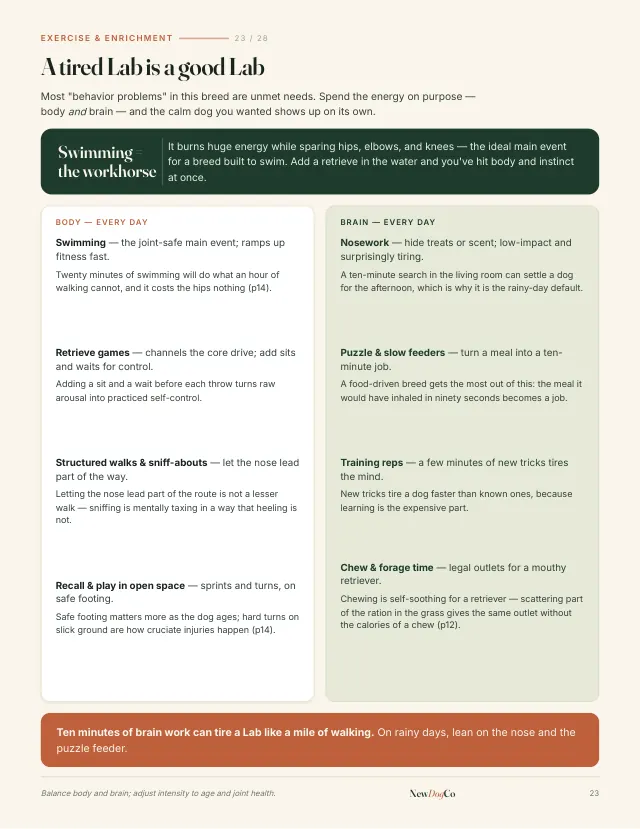
A healthy adult Lab needs substantial daily exercise: generally an hour or more of real activity, not a stroll around the block. They were bred to retrieve waterfowl all day, so they have stamina to burn and a deep love of water. Swimming, fetch, and long walks all suit them well.
Mental work matters as much as physical. Scent games, training sessions, and puzzle feeders tire a Lab in ways a walk alone cannot. A bored, under-exercised Lab is the one that eats the couch.
- Puppies: keep exercise low-impact and avoid forced running or repetitive jumping while growth plates are open, to protect developing joints.
- Adults: mix cardio (swim, fetch, hike) with brain work daily.
- Heat: Labs overheat easily; exercise in cooler hours and always offer water.
Build activity into a routine and your Lab settles calmly at home. Skip it, and the energy finds an outlet you won't like.
Grooming and coat care
The Labrador's short, dense double coat looks low-maintenance and mostly is — but it sheds heavily, and twice a year it 'blows' coat in a serious way. Expect hair on floors, furniture, and clothing regardless of season.
Weekly brushing keeps it manageable; during heavy shed periods, brushing several times a week with an undercoat tool removes loose fluff before it lands on everything. This double coat insulates against cold and water, so never shave a Lab; it doesn't reduce shedding and can interfere with natural temperature regulation and coat regrowth.
- Bathing: only as needed; over-bathing strips protective oils.
- Ears: those drop ears trap moisture, so dry and check them after every swim and bath to help prevent infection.
- Nails and teeth: trim nails regularly and brush teeth to support long-term health.
A quick, consistent routine beats occasional marathon grooming sessions.
Labrador Retriever health: what to watch for
Labs are sturdy, easygoing dogs, yet the breed carries recognized risks worth understanding. Guidance here supplements your veterinarian; it does not replace an exam.
- Hip and elbow dysplasia: orthopedic conditions the OFA and responsible breeders screen for; ask about health testing on both parents.
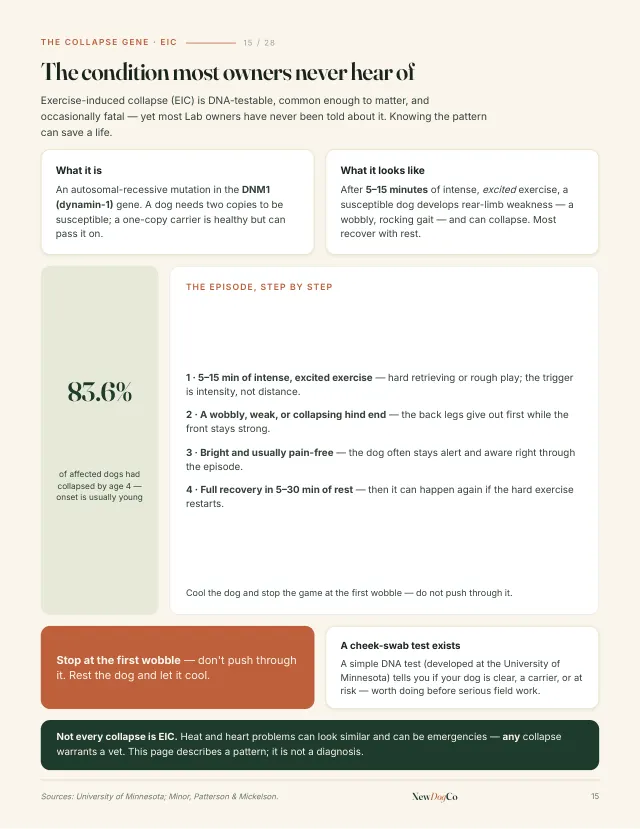
- Exercise-induced collapse (EIC): a genetic condition documented in Labs, with a DNA test available; affected dogs can weaken or collapse after intense exercise.
- Progressive retinal atrophy (PRA): an inherited eye disease with genetic testing available through breed-club recommended panels.
- Obesity and joint disease: many Labs carry a POMC gene variant linked to greater appetite; excess weight directly worsens joints and shortens life. Keeping a lean body condition is one of the most protective things you can do.
- Ear infections: common in this water-loving, drop-eared breed.
Parent-club and AVMA/AAHA resources recommend routine wellness care, weight monitoring, and choosing breeders who screen for these conditions. Report new limping, eye changes, or collapse episodes to your vet promptly.
Training your Labrador
Labs are one of the easiest breeds to train because they are smart, biddable, and work hard for rewards. Use reward-based, force-free methods: mark and reward the behavior you want, and manage the environment so mistakes are hard to make. Dominance, alpha rolls, prong or shock tools are unnecessary and counterproductive with a sensitive, cooperative breed like this.
Because Labs are so food-driven, treats are a powerful training currency — just subtract training treats from the daily food total so they don't drive weight gain. Small, low-calorie rewards or portions of the daily kibble work well.
- Recall and impulse control are priorities for a dog that loves to chase and swim.
- Loose-leash walking matters early, before an excited adult is towing you toward the water.
- Settle and 'leave it' curb the counter-surfing and mouthiness Labs are prone to.
Start young, keep sessions short and upbeat, and be patient through the long adolescent stage.
Feeding and weight control
If there is one thing that defines living with a Lab, it's managing the appetite. This breed is especially prone to obesity, and studies point to a POMC gene deletion common in Labs that increases hunger and food-seeking. Your Lab is not spoiled — it may be biologically wired to always want more.
That makes disciplined feeding the center of good Lab care:
- Measure every meal with a scale or measuring cup, because eyeballing leads to creep.
- Count treats and chews as calories and adjust meals accordingly.
- Score body condition monthly: you should feel ribs easily and see a waist from above.
- Resist the begging: those pleading eyes are the appetite talking, not real need.
A lean Lab moves better, suffers fewer joint problems, and tends to live longer. Work with your veterinarian to set the right daily amount and adjust it as activity and age change. Weight control is the single biggest lever you hold over your Lab's long-term health.