Can Dogs Eat Stuffing?
Stuffing is one of the riskiest dishes on the Thanksgiving table for a dog: most recipes start with onion and garlic, and some add raisins or currants.
On this page
No. Stuffing, or dressing when it’s baked in a pan, is a dish I keep entirely off a dog’s plate, and the Dog Toxic-Foods Checker lists it as toxic. A Pet Poison Helpline veterinarian called it “a potential trifecta of dangers”: most stuffing contains onion and garlic, and some recipes call for raisins. Any one of those is a concern on its own, and together they hit different organs at once.
If your dog has already eaten some, don’t wait for symptoms. Call your vet, ASPCA Animal Poison Control at (888) 426-4435 or Pet Poison Helpline at (855) 764-7661, and have the recipe or the box nearby.
Why stuffing is on the toxic list
It starts with onion and garlic. Nearly every savory stuffing starts with sautéed onion, and many add garlic, leeks or a dried seasoning blend. The ASPCA’s guidance for veterinarians names stuffing as one of the places onions and garlic turn up at Thanksgiving. These alliums cause oxidative damage to a dog’s red blood cells, and the Merck Veterinary Manual is clear that cooking doesn’t help: dogs have been poisoned by raw, cooked, dehydrated and granulated forms alike. Garlic is the stronger of the two, three to five times more toxic than onion by Merck’s figures.
Raisins and currants are the second threat. Some recipes add raisins or currants, and dried cranberries are sometimes sold mixed with raisins. ASPCA Animal Poison Control explains that tartaric acid is the suspected cause of the kidney damage grapes and raisins can do, and Pet Poison Helpline says the amount needed to poison a dog is unknown, so any ingestion should be taken seriously. My grapes and raisins guide explains why no one can name a safe number.
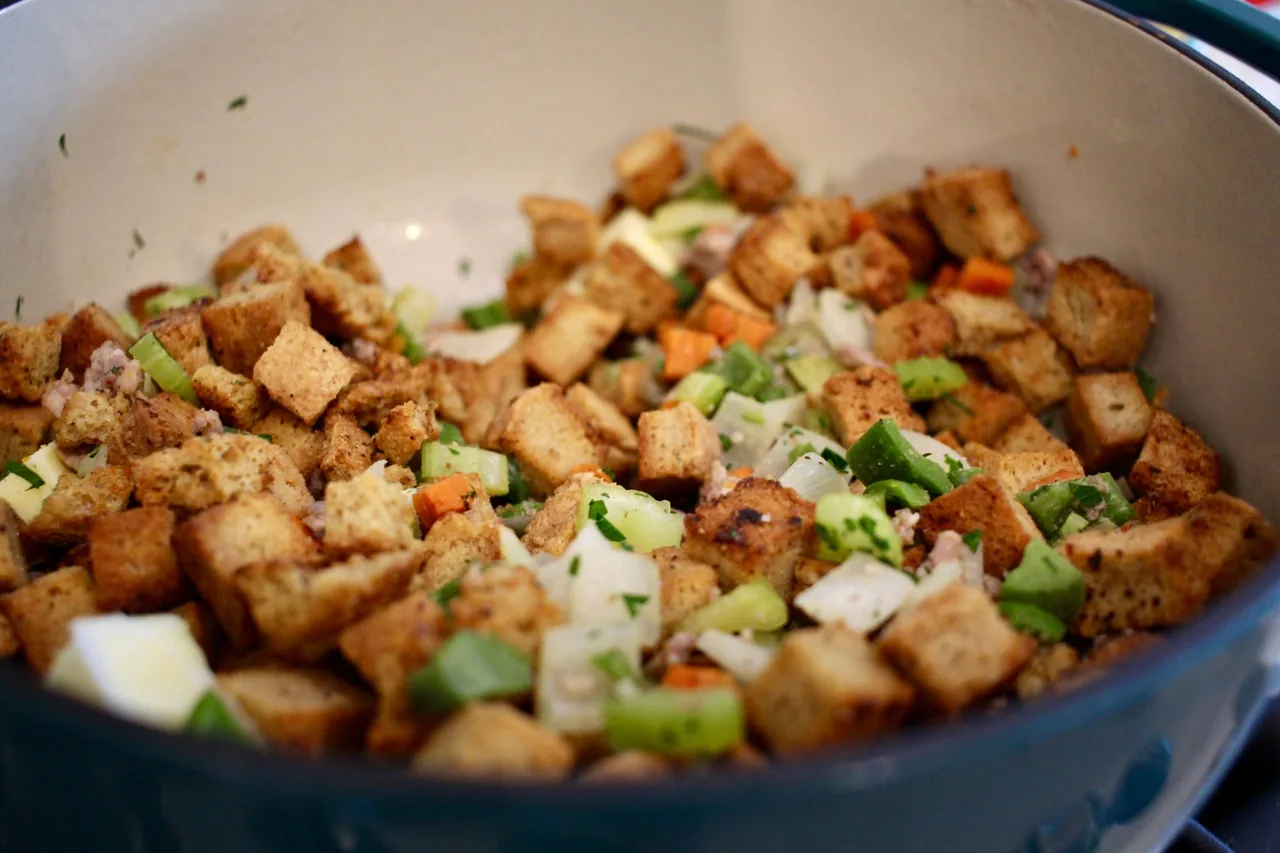
The combination is the real problem. Pet Poison Helpline’s veterinarians point out that when these ingredients are eaten together, the risk can be far greater, because each one causes a different kind of harm. A single spoonful can carry red-blood-cell, kidney and pancreas risks at the same time.
The fat most people forget
Even a stuffing without a single onion is rich. Butter, sausage and pan drippings are what make it taste like the holiday, and they’re also what the AVMA has in mind when it warns that dressing, gravy and other fatty scraps can be hard for pets to digest, with sometimes even a small amount causing pancreatitis. Pet Poison Helpline adds that pancreatitis signs, mainly vomiting, diarrhea, poor appetite and belly pain, can take up to four days to appear.
Other add-ins worth checking
- Nuts. Pecans and walnuts are high in fat, and ASPCA Animal Poison Control notes they can cause vomiting, diarrhea and potentially pancreatitis. Macadamias are toxic outright, with signs usually within 12 hours.
- Dried fruit. Check any dried cranberry or fruit mix for raisins or currants.
- Bread. The baked bread cubes aren’t the danger, but if anyone is making stuffing from a yeast dough that’s still rising, keep it out of reach; my bread guide explains why raw dough is an emergency.
The celery and carrots in the mix are fine on their own. They’re just in bad company.
What to do if your dog ate stuffing
- Call right away: your vet, an emergency clinic, ASPCA Animal Poison Control at (888) 426-4435 or Pet Poison Helpline at (855) 764-7661. Both lines are staffed 24/7, and a consultation fee may apply.
- Have the details ready: your dog’s weight, roughly how much she ate and when, and the ingredients. For a boxed mix, read the seasoning list out to them.
- Don’t induce vomiting at home unless a veterinary professional tells you to. Pet Poison Helpline discourages it because some material does more harm coming back up, and inducing vomiting can be harmful in certain pets.
- Keep watching for days, not hours. Merck notes that anemia from onion and garlic typically appears several days after exposure. Watch for weakness, tiring on short walks, pale gums, yellowing, fast breathing, or dark or reddish urine, and call if any appear.
Your vet may make your dog vomit safely at the clinic if it’s early, and may want to recheck her bloodwork over the following days. The free poison emergency card has the what/how much/when blanks the hotline will ask you to answer.
Keeping stuffing away from your dog
The stuffing accidents that reach poison lines often happen during cleanup, not at the table. In one case Pet Poison Helpline described, a dog grabbed a spoonful that fell while the leftovers were being packed away, and because that family’s recipe used raisins, the snack ended with a veterinary visit. Pack leftovers with the dog out of the kitchen, put containers straight into the fridge, and bag scraps in a bin she can’t open.
For the rest of the meal, my Thanksgiving foods guide sorts every dish into safe, caution and toxic, and the mashed potatoes guide covers the other side dish where garlic hides. If you want your dog included, a few pieces of plain turkey set aside before the stuffing goes in is the safe way to do it.
Frequently asked questions
- My dog ate a small bite of stuffing. Is that dangerous?
- It can be, and it's worth a phone call rather than a guess. How risky a bite is depends on the recipe (onion, garlic, raisins, currants), how much your dog ate, and her size; a spoonful means far more to a Chihuahua than to a Labrador. Onion and garlic damage is cumulative, so stuffing on top of gravy or seasoned scraps from the same meal counts together, and with raisins or currants there's no amount known to be safe. Call your vet, ASPCA Animal Poison Control at (888) 426-4435 or Pet Poison Helpline at (855) 764-7661 with your dog's weight and the ingredients, and let them tell you whether watching at home is enough.
- Is boxed stuffing mix safer than homemade?
- Not really. Boxed mixes get their flavor from a seasoning blend, and many list dried onion, onion powder or garlic powder among the ingredients. VCA Animal Hospitals explains that dried and powdered forms are more concentrated than fresh ones, with one teaspoon of garlic powder equal to about eight fresh cloves, so a small scoop of a boxed mix can carry more allium than it looks like. Check the ingredient list on the box: if it names onion, garlic, leek or chives, treat it exactly like homemade.
- What if the stuffing has no onion or garlic?
- It's less dangerous, but still not a dog food. Stuffing is usually made with plenty of butter or sausage, and the AVMA warns that dressing and other rich table scraps can be hard for pets to digest, with even a small amount sometimes causing pancreatitis. Add the salt, and the chance of nuts, dried fruit or raisins, and there's little upside. If you want your dog to have something from the meal, a few pieces of plain turkey or unseasoned sweet potato are far better choices.
- How soon would symptoms show after a dog eats stuffing?
- It depends on which ingredient caused the problem, which is one more reason not to wait. Vomiting or diarrhea can appear within hours. With onion and garlic, the Merck Veterinary Manual explains that red-blood-cell damage begins within a day, but signs of anemia such as weakness, pale gums, yellowing and collapse usually show up several days later. With raisins or currants, kidney injury develops over the following days, and treatment works best before any signs appear. Pancreatitis from a rich, buttery helping can take up to four days to show, according to Pet Poison Helpline.
Educational content only — not veterinary or professional behavior advice. Consult your vet, or a certified trainer or behaviorist, for your pet. Read the full disclaimer →