Can Dogs Eat Turkey?
Plain, boneless, skinless turkey is one of the few Thanksgiving foods a dog can share. The skin, the bones, the gravy and the brine are where the trouble starts.
On this page
Yes, in its plainest form. A few pieces of boneless, skinless turkey meat, cooked with nothing on it, are fine for most dogs, and the AVMA describes plain, boneless, skinless turkey as generally safe for pets in small portions. The Dog Toxic-Foods Checker lists plain cooked boneless turkey as safe, then gives turkey skin, fat and bones their own entry under caution. That split is the whole story: the meat is a lean protein, and almost everything that happens to it on Thanksgiving Day makes it less safe.
The good news is that a safe portion is easy to set aside. The rest of this guide covers why the holiday bird is different, the parts to keep away, how much meat to share, and what to do if your dog gets into the carcass.
Why holiday turkey isn’t plain turkey
Turkey itself isn’t toxic to dogs; it’s an ingredient in plenty of dog foods. The roast on the table is another thing. As the AKC points out, holiday birds are usually rubbed with butter or oil, seasoned with salt and herbs, and often have onions, garlic and other aromatics packed into the cavity. Onion and garlic are toxic to dogs in any form, cooked included, and they flavor the meat around them, which is one reason to take your dog’s share from the center of the breast rather than from the cavity or the pan.
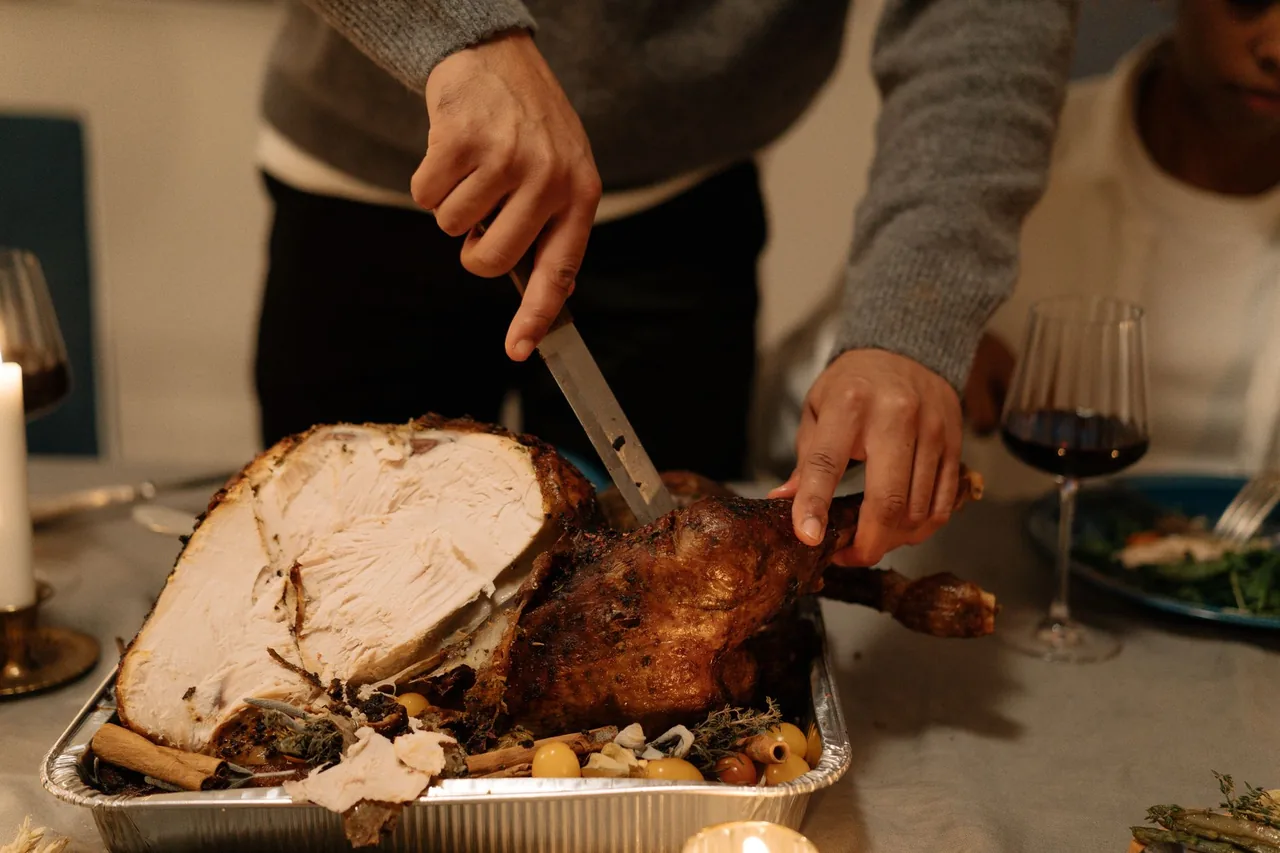
The ASPCA’s advice for sharing a bite is short: make sure it’s boneless and fully cooked. Raw or undercooked turkey may carry Salmonella, which is a problem for dogs and for the people cleaning up after them.
The skin, fat and drippings
This is the part that sends dogs to the vet the week after Thanksgiving. Pet Poison Helpline puts turkey skin in the same group as bacon and gravy: not toxic in the poison sense, but capable of causing anything from mild vomiting or diarrhea to severe, sometimes fatal pancreatitis. The FDA’s holiday guidance says the same thing in plain terms: don’t give pets fatty scraps like fat trimmings or skin from a roasted turkey.
Pancreatitis happens when digestive enzymes activate inside the pancreas instead of the gut and start damaging the organ itself. The Merck Veterinary Manual lists eating trash or large amounts of table scraps as a common risk factor, and some breeds, including Miniature Schnauzers, Yorkshire Terriers and Cocker Spaniels, are affected more often. VCA Animal Hospitals notes that a dog in pain may take a “praying” position, rear end up and chest down, and that dogs with severe cases are often hospitalized for two to four days. The timing is what catches people out: Pet Poison Helpline says symptoms can appear up to four days after the meal.
Bones, the carcass and the string
Cooked poultry bones are brittle, and the ASPCA calls them a major choking hazard. The FDA adds that dogs are notorious for raiding the trash for the turkey carcass, and that bones can lodge in the esophagus, stomach or windpipe, or splinter into sharp pieces that injure the gut. The trussing string that held the legs together is its own hazard; Pet Poison Helpline lists discarded turkey trussing among the leftovers that can cause an obstruction serious enough to need surgery.
The AVMA’s instructions for the carcass are specific, and worth following exactly: a tightly tied trash bag, inside a closed container outdoors or behind a door that stays shut. A kitchen can with a swing lid doesn’t count.
The brine bucket
Brined turkeys leave behind a hazard people rarely think of: the leftover liquid. Pet Poison Helpline warns that the salt-saturated solution is very attractive to dogs, who will readily lap it up, and that the result can be salt toxicosis: excessive thirst and urination, vomiting and diarrhea, and in serious cases dangerous electrolyte changes and brain swelling. Pour it down the drain as soon as the bird comes out, and don’t leave the brining bag or cooler on the floor.
How much turkey is okay
A few small pieces, plain and boneless, is a treat-sized portion: a little for a small dog, a small handful for a large one. That’s the portion guidance in the checker, and it matches the ASPCA’s list of meats that are fine to share, lean cooked turkey free of bones and seasoning. Treats of every kind should stay around 10% of your dog’s daily calories, and the Dog Feeding Calculator gives you the daily number to work from. If your dog has a history of pancreatitis or is on a low-fat diet, the Merck Veterinary Manual notes those dogs are usually kept on low-fat food and low-fat treats, so check with your vet before sharing even the white meat.
If your dog got into the turkey
- A few pieces of plain meat: usually nothing more than a happy dog. Offer water and skip the rest of the day’s treats.
- Skin, drippings or a large amount of meat: call your vet for advice, then watch for vomiting, diarrhea, a hunched posture, belly pain or refusing food for the next several days.
- Bones, the carcass or string: call your vet now, before any signs appear. Don’t make your dog vomit unless a veterinary professional tells you to.
- The brine: call your vet or a poison line right away and offer fresh water unless told otherwise.
Both 24-hour poison lines can help here: ASPCA Animal Poison Control at (888) 426-4435 and Pet Poison Helpline at (855) 764-7661 (a fee may apply). If the turkey came with stuffing or gravy attached, say so, because the onion and garlic in those dishes change the advice. My guides to stuffing and mashed potatoes cover those sides.
A turkey plate made for your dog
To include your dog in the day, the ASPCA suggests a small feast of her own: a few pieces of plain turkey mixed with some sweet potato and green beans into her usual dinner, or packed into a puzzle toy so she’s busy while you eat. The AVMA’s version is simply to make or buy a treat made just for her. Either one beats scraps from the table, and it gives guests an easy answer when she starts working the room. For the rest of the meal, dish by dish, see my Thanksgiving foods guide, and for anything you’re unsure of on the day, the checker has an answer in seconds.
Frequently asked questions
- Can dogs eat turkey skin?
- Skip it. Turkey skin is where the fat, the butter or oil from roasting, and the salt and seasoning all concentrate, and the FDA specifically advises against giving pets skin from a roasted turkey or chicken. Rich scraps can cause an upset stomach and, in some dogs, pancreatitis, a painful inflammation that the FDA says most often shows up as vomiting, stomach pain, restlessness, shaking, diarrhea, fever and weakness. Pet Poison Helpline notes that pancreatitis signs can take up to four days to appear, and that breeds such as Miniature Schnauzers are especially prone. If your dog ate a pile of skin or drippings, call your vet, even if she seems fine that evening.
- My dog ate a cooked turkey bone. What should I do?
- Get your veterinarian on the phone now, and don't try to make your dog vomit unless a veterinary professional tells you to, since a splintered bone can do damage on the way back up. The FDA explains that cooked bones can get stuck in the esophagus, stomach or windpipe, and that sharp fragments can injure the mouth, throat and stomach. Signs of a blockage aren't always immediate: hours to days later a dog may vomit, have diarrhea, go quiet, refuse food or seem to have a sore belly. Your vet may want x-rays, and in some cases an endoscope or surgery is needed to remove the pieces. Gagging, drooling or straining to pass stool are reasons to go in right away.
- Can dogs eat deli turkey or raw turkey?
- Neither is a good idea. Deli turkey is a processed meat, and the ASPCA advises avoiding lunch meats because they can be high in salt. Raw or undercooked turkey is a different risk: the ASPCA notes it may carry Salmonella, which can make both dogs and the people handling them sick. Some owners feed raw meaty bones such as turkey necks as part of a diet planned with their veterinarian, and the AKC points out that any raw bone still carries a bacteria risk; that's a decision for a conversation with your vet, not a holiday experiment. For a treat, fully cooked, plain, boneless turkey is the safe version.
- How much turkey can I give my dog?
- Think treat, not serving. A few small plain pieces is plenty: a little for a small dog, a small handful for a large one, which is the portion the Dog Toxic-Foods Checker uses for plain cooked turkey. All treats and extras together should stay around 10% of your dog's daily calories, and the free feeding calculator gives you that number. If your dog has had pancreatitis, is on a low-fat or prescription diet, or has another health condition, ask your vet before adding any turkey, even the lean white meat.
Educational content only — not veterinary or professional behavior advice. Consult your vet, or a certified trainer or behaviorist, for your pet. Read the full disclaimer →