How Do I Stop My Dog Jumping on People?
Why jumping up is so hard to shake — and the calm, reward-based way to teach four-on-the-floor instead.
On this page
Dogs jump on people because it works: jumping up earns attention, and to a dog, almost any attention — talking, eye contact, pushing them off, even a knee — can count as a reward. So the fix isn’t punishing the jump; it’s flipping which choice pays. You ignore the jump (turn away, no attention at all), and you reward four paws on the floor and calm greetings generously. Done consistently by everyone, it works — but it takes weeks of repetition, not a weekend.
The single biggest reason jumping sticks around is that it gets rewarded by accident, over and over, by different people. (Jumping is over-excited greeting rather than fear, but it lives in the same reactivity & behavior toolkit.)
Why does my dog jump on people?
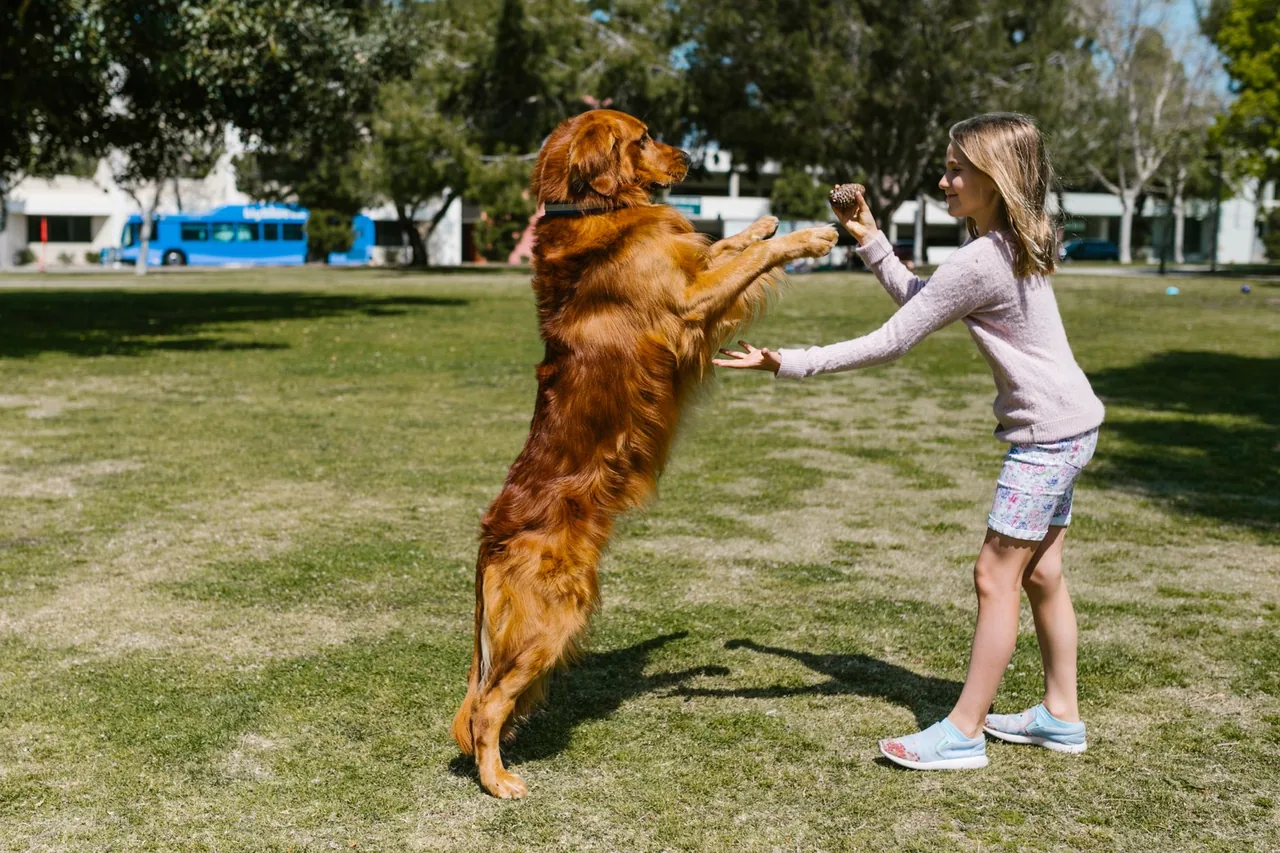
Because they’re excited to say hello and want to get closer to your face — jumping is a normal, friendly greeting in dog world, not defiance. Puppies do it to reach and lick; adults keep doing it because it has a long history of working.
Here’s the trap: attention is the reward, and “negative” attention still counts. When your dog jumps and you say “off!”, make eye contact, or push them down, you may feel like you’re correcting them — but from the dog’s side, the jump just made the human talk to them and touch them. The behavior got paid.
Excitement makes it worse. A dog who’s over-aroused at the door or greeting a new person literally can’t think straight, so the calm cues they know at home fall apart. Learning to read your dog’s arousal — the whining, the wiggle, the hard stare at the door — helps you step in before they launch.
Should I knee my dog, step on their toes, or push them off?
No. These old “corrections” tend to backfire, and some can hurt. A knee to the chest can injure a smaller dog; more often, an excited dog reads the shove or the raised knee as rough play and jumps more. Others learn to fear hands reaching toward them, which creates a new problem worse than the first.
The American Veterinary Society of Animal Behavior (AVSAB) is clear that aversive, punishment-based methods raise fear and anxiety without teaching the dog what to do. Jumping is an easy behavior to fix kindly, so there’s no reason to risk it.
How do I actually stop the jumping?
Two moves, always together: remove the reward for jumping, and pour rewards into the alternative.
Take away the attention. The instant paws leave the floor, become boring: no eye contact, no talking, no touch. Turn away, or calmly step back. You’re not scolding — you’re showing that jumping makes the fun human disappear.
Pay hard for four-on-the-floor. The moment your dog’s paws are back down, or even better when they sit, mark it (“yes!”) and reward with a treat, calm praise, and greeting. You’re teaching a simple rule: floor pays, jumping ends the party. Many trainers teach a “sit to say hello” so the dog has a clear job that’s incompatible with jumping.
Set them up to get it right. Practice greetings when your dog is calmer, not just at the front-door frenzy. Keep treats by the door. Ask for a sit before they’re airborne, and reward that.
Consistency is everything. If jumping pays off even one time in five — a giggling visitor, a family member who pets the jumping dog — you’re on a slot machine, and slot machines are addictive. Everyone has to play by the same rules.
How do I handle jumping at the door or on guests?
Manage the situation so your dog can’t rehearse the jump on people who won’t follow the plan. Management and training run in parallel.
Use a leash, a baby gate, or a tether near the door so an excited dog can’t reach guests until four paws are calm. Give visitors a simple script ahead of time: “Ignore him completely until he sits, then you can say hi.” Toss treats on the floor to reset an over-the-top greeter — sniffing the ground is calming and incompatible with launching. If it’s too much, let your dog settle in another room first and greet once the initial excitement has passed. (The same calm, staged approach helps for a dog who’s overwhelmed by visitors.)
A well-exercised, enriched dog also has an easier time keeping four on the floor — some jumping is just a bucket of unspent energy. Our guide to easy enrichment that beats boredom covers the daytime side of that.
Does my dog jump because they’re being “dominant”?
No — this is a stubborn myth. Jumping is greeting and attention-seeking, not a bid to be “pack leader.” Framing it as dominance points you toward confrontational corrections, which are exactly what backfires here.
Treat it as what it is — an over-excited hello that’s been accidentally rewarded — and the reward-based fix falls right into place.
When should I get help?
Most jumping is a manners problem you can solve at home with consistency. This is educational content, not veterinary advice.
Loop in your veterinarian if the jumping is sudden and out of character in an adult dog, or comes with other new behavior changes — a physical or medical cause is worth ruling out first. And bring in a credentialed, reward-based professional — a certified trainer (CCPDT), a behavior consultant (IAABC), or a veterinary behaviorist (DACVB) — if your dog is large enough to knock someone over, jumps on children or frail adults, or if the jumping comes with mouthing, snapping, or any sign it’s fear rather than friendly excitement.
Polite greetings come from calm foundations and a household that all plays by the same rules. Our New Dog Owner Starter Kit gathers the routine, management, and reward-based basics that make four-on-the-floor easy to teach. And because so much of jumping is runaway excitement, the Dog Body Language Chart Pack helps you catch the wind-up before your dog leaves the ground. Keep it kind, keep it consistent, and let the floor be the thing that pays.
Frequently asked questions
- Does ignoring my dog really stop jumping?
- Ignoring is only half of it, and on its own it can be slow — or even spark a brief "extinction burst" where your dog tries harder before giving up. It works when you pair it with generously rewarding the sit or four-on-the-floor, so the dog has a clear, better way to earn the attention they want. Remove the payoff and pay the alternative, every time.
- How long does it take to stop a dog jumping?
- Usually a few weeks of consistent practice, sometimes longer for a dog with years of rehearsal. Progress looks like fewer jumps, a faster return to the floor, and offering a sit on their own. The timeline depends far more on everyone being consistent than on the dog — one person who rewards jumping resets the clock.
- Why does my dog only jump on some people?
- Because those people (often visitors or excitable kids) reward it — with squeals, petting, or eye contact — while others ignore it. Dogs are superb at learning who pays out. Give guests the "ignore until he sits" script and the pattern evens out.
- Should I use a knee or a spray bottle to stop jumping?
- No. Knees can injure a dog, and startle tools like spray bottles add fear without teaching the greeting you want; both often make excited dogs worse. Reward-based greeting training is more effective and can't backfire into fear or aggression.
Educational content only — not veterinary or professional behavior advice. Consult your vet, or a certified trainer or behaviorist, for your pet. Read the full disclaimer →