Can Dogs Eat Pumpkin Pie?
Pumpkin is good for dogs. Pumpkin pie is a dessert built on sugar, butter crust, cream and spice, and one version of it is a true emergency.
On this page
Skip the slice. Pumpkin itself is one of the better things a dog can eat, and pumpkin pie is one of the less sensible ways to serve it. The AVMA draws the same line: small pieces of pumpkin can be a healthy snack for pets, but pumpkin pie can contain ingredients that are toxic to them, so the pie is better left for people. In the Dog Toxic-Foods Checker, plain pumpkin is safe and pumpkin pie is a caution.
Most pumpkin pie accidents end with nothing worse than a messy yard. One version doesn’t, and it’s covered below in the emergency version: sugar-free pie.
Pumpkin vs. pumpkin pie
Pumpkin on its own earns its reputation. Pet Poison Helpline describes it as nutritious and safe for dogs and cats: a good source of vitamins (especially vitamin A), minerals and fiber, and low in calories. Cooked or canned pumpkin is easier to digest than raw, and the ASPCA includes cooked canned pumpkin on its list of good snacks to share. The one thing to check at the store is the label, because plain pumpkin and pumpkin pie filling sit side by side in nearly identical cans; the one you want lists pumpkin as its only ingredient.
Pie is a different recipe entirely. The pumpkin is mixed with sugar, eggs, evaporated or condensed milk and spice, baked into a butter or shortening crust, and usually topped with whipped cream.
What’s in a slice
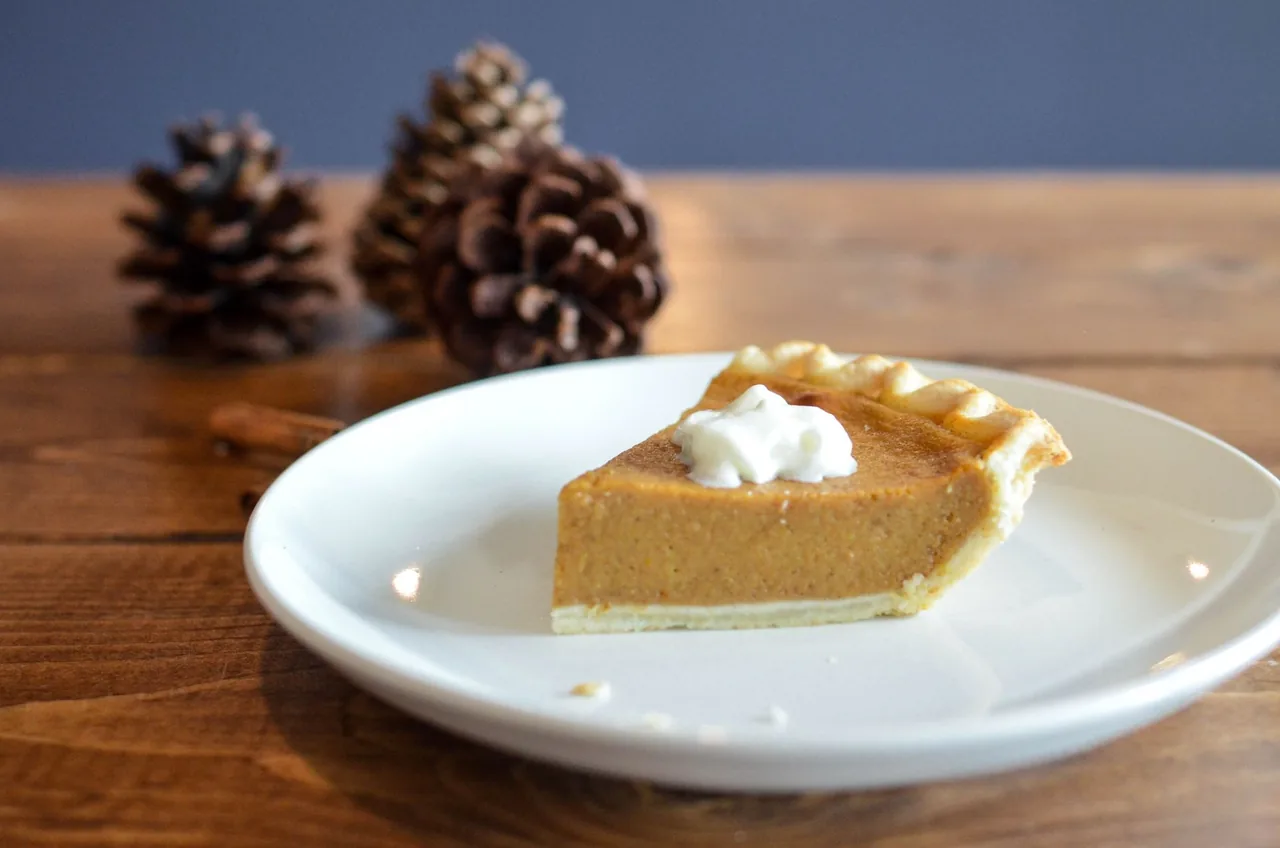
- Sugar. Nothing a dog needs, and a lot of it. The ASPCA notes that too much fat or sugar can lead to pancreatitis.
- The crust. Butter or shortening makes it flaky, and that makes it fatty.
- Milk and cream. ASPCA Animal Poison Control explains that pets don’t make much lactase, so dairy commonly causes diarrhea. The ASPCA’s guidance for veterinarians specifically names pumpkin pie with whipped cream as a holiday dessert that can lead to pancreatitis.
- Spice. Cinnamon, ginger, cloves and nutmeg. Pet Poison Helpline notes cinnamon is generally well tolerated and takes more than about a teaspoon of the powder to cause problems for most pets; nutmeg gets its own section below.
Nutmeg: a large-amounts worry
Nutmeg shows up on a lot of scary lists, so here’s the scale. Pet Poison Helpline’s veterinarians explain that nutmeg contains myristicin, and that the small amount used in recipes is very unlikely to cause serious toxicity, though a little mild stomach upset is possible. A pet would need to eat a very large amount, the kind that comes from a chewed-open spice jar, to develop the serious signs: disorientation, hallucinations, a racing heart, high blood pressure, abdominal pain and possibly seizures, lasting up to 48 hours. There’s no reason to add nutmeg to anything you make for your dog, and the spice rack belongs up high.
The emergency version: sugar-free pie
Sugar-free and low-sugar pies are often sweetened with xylitol, which may also be listed as birch sugar. Pet Poison Helpline warns that xylitol, once mostly found in gum and mints, is now common in sugar-free baked goods, and that even amounts that look very small can quickly become life-threatening for dogs. It causes a sudden drop in blood sugar, and Pet Poison Helpline notes symptoms can begin within 10 to 60 minutes; ASPCA Animal Poison Control adds that liver damage can follow within 12 to 24 hours. If your dog ate any sugar-free dessert, check the label and call right away, even if she seems fine. My xylitol guide covers the signs and the treatment.
A chocolate-bottomed or chocolate-drizzled pie brings the same urgency for a different reason; the chocolate guide explains how the type of chocolate changes the risk.
If your dog ate pumpkin pie
In a Pet Poison Helpline safety post, the author recalls waking up to find the family dog had licked the filling out of three cooling pies. There was no toxicity, just a long, fiber-filled day. That’s the typical outcome for a regular pie, but not a guarantee:
- A lick or a bite of a regular pie: usually nothing. Watch for a soft stool.
- A large amount, the crust, or whipped cream: call your vet, especially for a small dog or one that has had pancreatitis, and watch for vomiting, diarrhea, belly pain or refusing food over the next few days.
- A sugar-free pie, or one with chocolate: call your vet, ASPCA Animal Poison Control at (888) 426-4435 or Pet Poison Helpline at (855) 764-7661 immediately. A fee may apply.
Sharing pumpkin the right way
A spoonful of canned pumpkin makes a good Thanksgiving treat of your dog’s own. The checker’s portion is about a teaspoon for a small dog up to a tablespoon or two for a large one, stirred into a meal; more than that tends to loosen stools. Like every extra, it counts toward the roughly 10% of daily calories that treats should stay under, and the Dog Feeding Calculator gives you your dog’s number. Keep the seeds and rind out of it.
For the rest of the table, my Thanksgiving foods guide sorts every dish, and the cranberry sauce guide covers the other sweet side that shows up next to the pie.
Frequently asked questions
- Can dogs eat canned pumpkin pie filling?
- No, not the kind labeled pie filling or pie mix. It's pumpkin that has already been sweetened and spiced for baking, which is exactly what you're trying to avoid. The product you want is plain canned pumpkin, sometimes labeled pumpkin puree, and Pet Poison Helpline's advice is to check that pumpkin is the only ingredient. The cans sit side by side on the shelf and look almost identical, so read the label every time. If your dog has already had a spoonful of pie filling, it's unlikely to be dangerous unless the product is sugar-free, in which case check for xylitol and call your vet.
- My dog ate a whole pumpkin pie. What now?
- Look at the label or recipe first. If the pie was sugar-free or contained chocolate, call your vet or a poison line immediately. A regular pumpkin pie is not toxic. In one Pet Poison Helpline safety post, the author's own dog licked the filling out of three pies overnight, with no toxicity but a memorable 24 hours of digestive upset from all that fiber. It's still worth calling your vet, especially for a small dog, a dog with a history of pancreatitis, or if whipped cream or the crust went down too, since the ASPCA's veterinary guidance links pumpkin pie with whipped cream to pancreatitis. Watch for vomiting, diarrhea, belly pain or refusing food over the next few days.
- Is nutmeg toxic to dogs?
- In large amounts, yes; in the amount baked into a slice of pie, very unlikely. Pet Poison Helpline explains that nutmeg contains a toxin called myristicin, that the small amount used in recipes is very unlikely to cause serious toxicity (though it could cause mild stomach upset), and that a very large amount can cause disorientation, hallucinations, a fast heart rate, high blood pressure, dry mouth, abdominal pain and possibly seizures lasting up to 48 hours. The realistic danger is a dog getting into the spice jar itself, so keep baking spices up high, and call your vet if a jar is chewed open.
- Can dogs eat pumpkin seeds or the jack-o'-lantern?
- Skip both. Pet Poison Helpline says pumpkin seeds and rind should not be fed to pets, because they're tough and pose a risk of choking and intestinal obstruction. Raw pumpkin flesh is safe but harder to digest than cooked. A carved jack-o'-lantern has a second problem once it sits out for a few days: it starts to rot, and moldy food is on the toxic list in the Dog Toxic-Foods Checker because molds can produce toxins that cause tremors. Compost or bin it where your dog can't reach.
Educational content only — not veterinary or professional behavior advice. Consult your vet, or a certified trainer or behaviorist, for your pet. Read the full disclaimer →