Why Does My Dog Chew Everything?
Chewing is a normal dog behavior at every age. The real question is why your dog is chewing the wrong things, and how to give that need a better outlet.
On this page
Chewing is normal at every age, the ASPCA says: it eases a puppy’s sore gums, keeps an adult dog’s jaws strong and teeth clean, and relieves boredom and mild anxiety or frustration. A puppy chewing everything is usually teething, an intense phase the ASPCA says usually ends by six months. An adult that destroys things usually needs more to do, or may be anxious, especially if it only happens when alone.
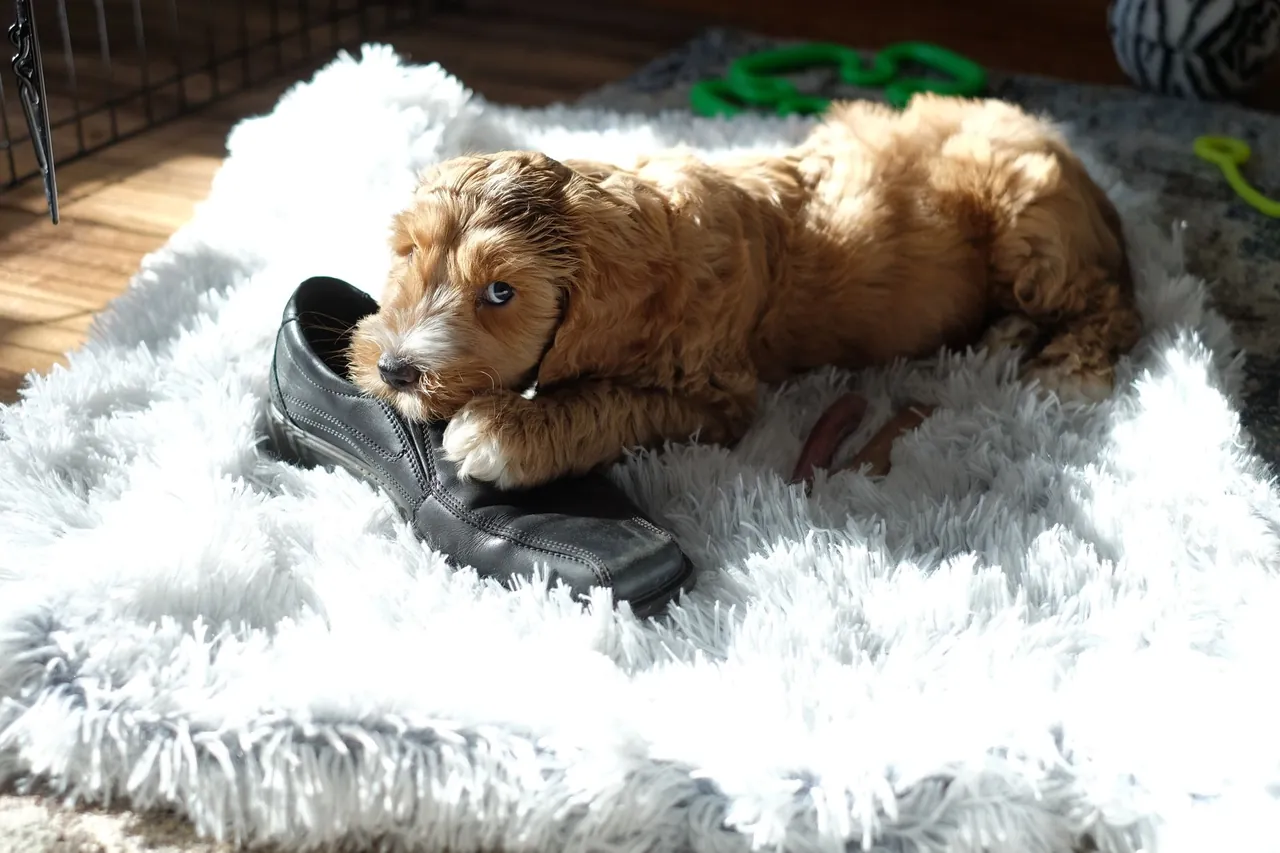
Why dogs chew
- Teething. VCA’s timeline: baby teeth come in from about 3 weeks, start falling out at about 12 weeks, and the adult teeth are all in by about 6 months. Excessive chewing seems to settle around 18 months, VCA says, though some chewing lasts for life. Full timeline: when puppies stop teething.
- Play and investigation (VCA).
- Boredom. The ASPCA says chewing combats boredom, and VCA notes that in adult dogs, chewing out of boredom or excitement is a normal behavior showing up in an abnormal way.
- Never learning what’s allowed (Humane World for Animals).
- Anxiety and fear. Chewing can be a way to cope (Humane World), and separation anxiety is on every source’s list.
- Hunger. The ASPCA notes that dogs on calorie-restricted diets may chew looking for food.
Boredom or separation anxiety?
The ASPCA says separation-anxiety chewing happens mainly when the dog is alone, along with whining, barking, pacing and restlessness. If the damage happens while you’re out, VCA suggests recording your dog on video to see what’s going on. This guide helps you sort it out: separation anxiety or boredom.
What helps
- Dog-proof your home and give plenty of chew toys, rotated (ASPCA). The free puppy-proofing checklist covers it room by room.
- Supervise during all waking hours while your dog learns (ASPCA).
- Trade, don’t grab. Swap the forbidden item for an appropriate toy (Humane World).
- Add exercise and mental stimulation (ASPCA). Ideas: dog enrichment.
- Soothe teething gums. The ASPCA suggests frozen wet washcloths, and Humane World a frozen rubber toy, with supervision so no pieces are swallowed.
- Use a taste deterrent on things you can’t move (ASPCA).
- Skip very hard chews. VCA warns that nylon chews, bones and antlers can break both baby and adult teeth.
What not to do
- Don’t punish after the fact. The ASPCA says not to show your dog the damage and then punish, and VCA says punishing a completed act only increases anxiety.
- Don’t scold, pull things out of the mouth or chase your dog (Humane World). The “guilty look” is a submissive posture.
- Don’t hand over old shoes or cushions as toys (ASPCA).
When it’s a vet issue
Chewing becomes a medical worry when your dog swallows what it chews. VCA calls persistently swallowing non-food items pica, and lists possible medical causes including anemia, malnutrition, diabetes, Cushing’s disease, digestive diseases, intestinal parasites, brain conditions and some medications. The main danger is a blockage in the gut, VCA says, and sharp objects can perforate it and cause life-threatening peritonitis. Call your vet if your dog has swallowed something it shouldn’t have, or shows pain, a reduced appetite or vomiting. Retained baby teeth also need removing by a vet (VCA).
Frequently asked questions
- When will my puppy stop chewing everything?
- The ASPCA says the intense teething phase usually ends by six months, around the age VCA says the adult teeth are normally all in. VCA adds that excessive chewing seems to settle around 18 months, though some chewing continues for life, so plan on giving your dog suitable chews long term.
- Why has my adult dog started chewing things?
- Look at what changed. The ASPCA lists boredom, mild anxiety or frustration, separation anxiety and calorie-restricted diets among the reasons adult dogs chew. If it happens only when your dog is alone, along with whining, barking or pacing, separation anxiety is a likely cause; VCA suggests recording your dog to check. Mention a sudden change to your vet as well.
- Do bitter sprays work?
- The ASPCA lists taste deterrents as one of several tools, together with dog-proofing, plenty of chew toys, supervision during waking hours, and exercise and mental stimulation. They protect the things you can't move; the other steps deal with the reason for the chewing.
- What chew toys are safe for a puppy?
- VCA advises against very hard chews such as nylon, bones and antlers, which can break baby and adult teeth. Humane World for Animals suggests a rubber toy, frozen to soothe sore gums, with supervision so no pieces are swallowed.
Educational content only — not veterinary or professional behavior advice. Consult your vet, or a certified trainer or behaviorist, for your pet. Read the full disclaimer →