Can Dogs Eat Pears?
Juicy, sweet and full of fiber, pear flesh is a safe fruit treat for dogs. The core and seeds are the parts to remove, and canned pears are the version to skip.
On this page
Yes, dogs can eat pears. The free Dog Toxic-Foods Checker lists pear (no core or seeds) as Safe: “Fiber and vitamins in the flesh; skip the core and seeds (the seeds contain traces of cyanide compounds).” Peeled or unpeeled flesh, cut small, is a juicy treat most dogs enjoy.
This page covers which parts to remove, how much to give, and why canned pears are the version to skip.
Why pear makes a good treat
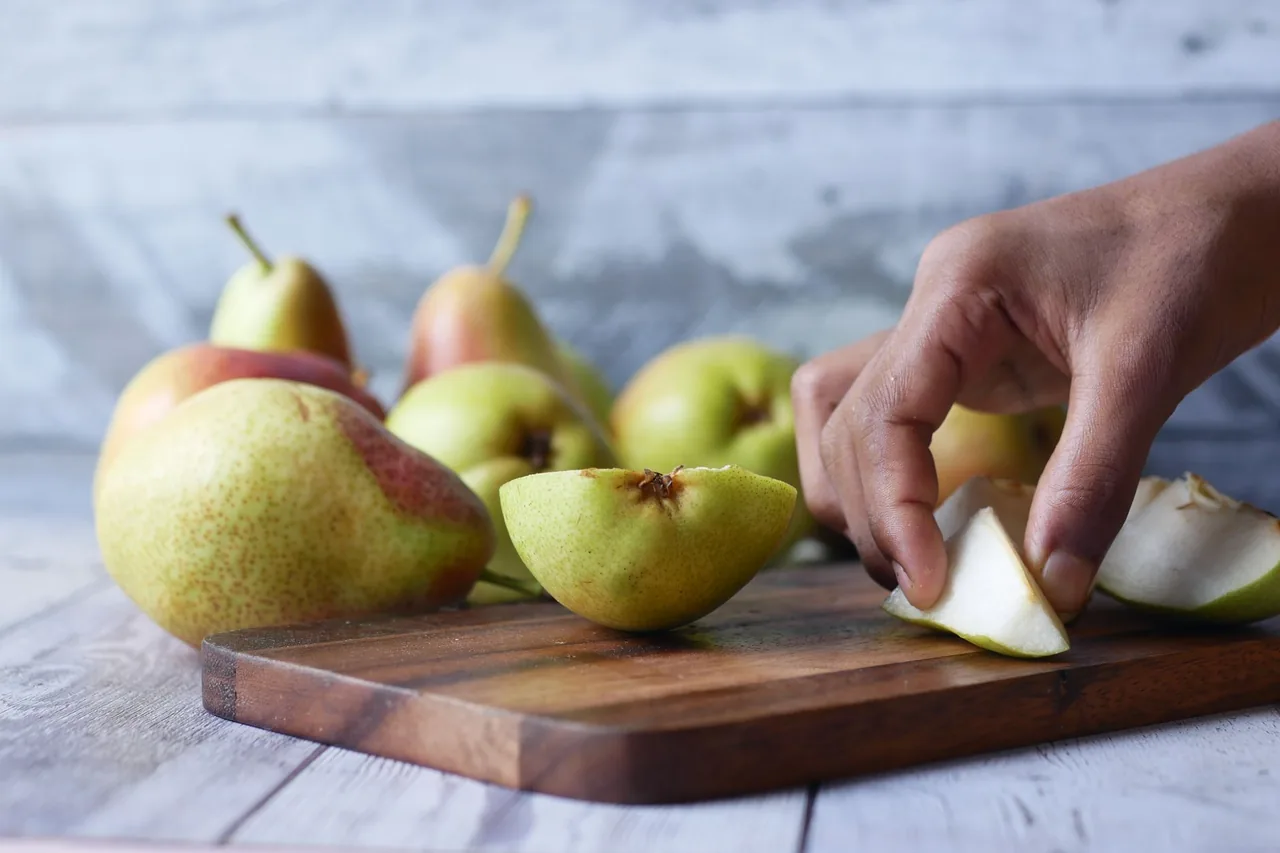
Pear flesh is soft, sweet and high in water and fiber, which makes it a refreshing treat, especially in warm weather. It’s an easy fruit to share: no pit to worry about, just a core to cut around. For a dog on a complete diet, the vitamins and fiber are a bonus. The real value is a plain, whole-food treat to rotate with other fruit.
What to remove: core, seeds and stem
The AKC says dogs shouldn’t eat pear seeds because they contain traces of cyanide compounds, and the checker agrees. The core is also tough and a choking risk. So:
- Wash the pear.
- Cut the flesh away from the core in slices.
- Throw away the core, seeds and stem, where your dog can’t get them.
- Cut the slices small, especially for small dogs and fast eaters.
A dog that steals a whole pear and swallows a seed or two is very unlikely to be poisoned. But several whole pears, cores included, are worth a call to your vet, both for the seeds and for the risk of a core getting stuck. It’s the same rule as apples (apples).
How much pear to give
The checker’s portion guide: a slice or two cut small — a couple of thin pieces for a small dog, a few for a large one. The AKC notes one slice now and then is reasonable for a small dog.
- Keep it occasional. Pears have natural sugar, and too much fruit can loosen stools.
- Count it as a treat: all treats together within about 10% of daily calories, the guideline AAHA uses. The free Dog Feeding Calculator gives your dog’s daily number.
The versions to skip
- Canned or jarred pears: the AKC advises against them, even those labeled “in their own juice,” because of the added sugar.
- Pear desserts: tarts, crumbles and poached pears add sugar, butter and sometimes spices or alcohol.
- Sweetened dried pears: concentrated sugar in a small package.
- Pear-flavored yogurt or snacks: sweetened, and sometimes made with xylitol (xylitol).
More fruit to rotate
Pears fit into a rotation of plain, dog-safe fruit: blueberries, banana, strawberries, and watermelon without seeds or rind. Never grapes or raisins (grapes). The free food safety chart puts the whole Safe / Caution / Never list on the fridge.
Frequently asked questions
- How much pear can my dog eat?
- The site's Toxic-Foods Checker suggests a slice or two cut small: a couple of thin pieces for a small dog, a few for a large one. The AKC notes that for small dogs, one slice now and then is reasonable. Pears have natural sugar and fiber, so too much can upset the stomach, and all treats together should stay within about 10% of daily calories.
- Are pear seeds poisonous to dogs?
- Pear seeds contain traces of cyanide compounds, which is why the AKC and the checker both say to remove them. A dog that swallows a seed or two from a stolen pear is very unlikely to be poisoned, but the seeds and the tough core are also a choking risk, so take them out every time. If your dog ate several whole pears, cores and all, call your vet.
- Can dogs eat pear skin?
- Yes. The checker says peeled or unpeeled flesh is fine. Wash the pear well first. Peeling it can make it easier on a sensitive stomach and easier to chew for a small or older dog.
- Can dogs eat canned pears?
- The AKC advises against canned or jarred pears in sugary syrup, even the ones labeled 'in their own juice', because of the added sugar. A spoonful your dog licked off the floor is unlikely to do more than upset the stomach, but fresh pear is the better treat. Dried pears are also much more concentrated in sugar, so skip sweetened ones.
Educational content only — not veterinary or professional behavior advice. Consult your vet, or a certified trainer or behaviorist, for your pet. Read the full disclaimer →